

Most buyers come to East Nashville with a number and a vibe. "We can spend $650K. We want something with character." Both are reasonable. Neither one tells you whether the next ninety days end with the right house or a $40,000 mistake you'll be making payments on until 2055.
Where You'd Love to Live · 3-Minute Quiz
Is East Nashville the one — or is there a better fit you haven't seen?
Three minutes instead of months of research — no sign-up to see your top match.
Here's the thing nobody warns you about East Nashville: the house is rarely the problem. The problem is everything attached to the house that doesn't show up in the listing photos. The flood line three feet behind the back fence. The short-term-rental income the previous owner casually mentioned, that you legally cannot inherit. The historic overlay that turns a weekend window swap into a four-month approval process. The tall-skinny build that looks immaculate and is quietly letting water in behind the siding. This guide is the long version of the conversation we have on every East Nashville buyer call — what each budget actually buys, how the process really runs here, and the specific gotchas that cost buyers real money. We're going to spend most of our time on the gotchas, because that's where the money is.
The one-sentence version
In East Nashville, you are not just buying a house — you're buying a flood zone, a zoning overlay, a permit situation, and a builder's reputation, all bundled together. Get those four right and the house almost takes care of itself.
615-265-1000If You're Moving Here From Out of State
If you're coming from somewhere with a normal grid of subdivisions, East Nashville will feel chaotic in a way that's mostly charming and occasionally expensive. Two blocks can look identical on a map and behave like different zip codes. One is in a historic overlay where you can't change a porch railing without a review; the other isn't. One sits on high ground; the other floods. One has a transferable rental permit; the other had one that evaporated the day it sold. None of this is visible from the curb, and out-of-state buyers are the ones most likely to skip the homework because they're moving fast and trusting the photos.
The single most useful thing you can do from out of state is buy the homework before you buy the plane ticket. Have someone pull the flood map, the overlay status, and the permit history on any address before you fall for it on a Tuesday-night Zillow scroll. We do this for relocating buyers, precisely because the alternative — flying in, falling in love, and finding out the gotcha during the inspection period — is how out-of-state buyers overpay. You don't have the local muscle memory yet. That's fine. Borrow ours until you do.
What Different Budgets Actually Get You
East Nashville isn't one market — it's at least six, split by pocket and price band. Here's the honest read on what each budget realistically buys. These are qualitative pictures, not price promises; the market moves, and we'll pull live comps for your specific search. But the shape of each band has held long enough to plan around.
Smaller Bungalows, Mid-Century Brick, and Condos
At this band you're mostly looking at smaller original bungalows on the eastern edges or in Inglewood and Cleveland Park, mid-century brick ranches with more square footage, or newer condos and townhomes with modest finishes. The trade-off is location density — you're farther from Five Points walkability — and inherited maintenance. A $400K bungalow with $80K of needed work is functionally a $480K house. The roof, the HVAC, and the sewer line on these older homes have a way of aging at the exact same rate and failing in the same eighteen months. The right agent helps you see that bill before you write the offer, not after.
The Heart of the Market
This is the biggest and most competitive band, where most buyers actually transact. You'll see renovated mid-century ranches in Inglewood with solid bones and a previous flipper's open floor plan; partially updated craftsman bungalows in Eastwood and the smaller homes of Lockeland Springs, where you're charming but a few rooms short of done; and smaller modern infill built in the last decade — easy to maintain, lighter on character, and only as good as the builder who put it up. This is the band where builder quality stops being a footnote and starts being the whole game.
Renovated Homes With Real Bones
Here you start seeing East Nashville at its best: fully renovated craftsman bungalows in Lockeland Springs and Eastwood, well-built modern infill in the 2,500–3,000 sq ft range, and the occasional architecturally significant historic home. Lots are still modest by Nashville standards, so in this band the block matters more than the square footage. What's worth paying up for: off-street parking and a real driveway (a meaningful premium for a real reason on event nights), a genuinely usable yard on a neighborhood full of narrow lots, recent mechanical updates that account for most of the long-term cost of owning a hundred-year-old house, and a finished basement or accessory dwelling unit that gives you optionality.
Premier Lockeland Springs and Top-Tier Infill
At the top of the typical market you're looking at fully restored Victorian estates in Lockeland Springs, premier modern singles with garages and outdoor space, and the occasional architect-designed custom home. These tend to pair original character with full updates — which is exactly what buyers are paying up for. Even here, the overlay rules and flood lines below still apply, and they apply harder, because the dollars at stake are bigger.
Trophy Properties
A small number of East Nashville homes trade in this range each year — corner lots in Lockeland Springs, architect-built statement homes, the rare combination of historic restoration and a large lot. Inventory is sparse, and some homes at this level are marketed privately before they list. If this is your band, ask us how we hear about those, alongside the search alerts.
How the Buying Process Actually Runs Here
The mechanics of buying in East Nashville are standard Tennessee real estate with a few local wrinkles that change the timeline. Knowing the sequence keeps you from getting rushed into waiving the wrong thing.
- Get fully underwritten before you tour, not just pre-qualified. In a competitive band, the buyer who can close clean and fast wins ties. And if you're eyeing new construction on an HPR lot or a condo, your lender needs to know that up front — some loan products treat those differently, and you don't want to learn that the week before closing.
- Do the desk homework on any address before you tour it: flood map, overlay status, and permit history. This is ten minutes that routinely saves a wasted Saturday.
- Tour with the block in mind, not just the house. Walk the specific street on a Wednesday evening and a Saturday night — those are the two diagnostics for how a block actually lives.
- Write the offer with the right inspection period. In Tennessee the inspection (resolution) period is negotiated, not fixed. On a pre-1980 home, protect enough days to also get a sewer scope and, if needed, an elevation certificate — don't let a hot market talk you into a window too short to actually investigate.
- Inspect deeper than the general report. Budget for a sewer scope on anything pre-1980, an HVAC and electrical eval on old systems, and a builder/warranty review on anything new. The general inspection is the trailer; these are the movie.
- Use the inspection findings to renegotiate or walk. This is where a good agent earns the entire fee — surfacing the real number behind the issues and either getting the price right or advising you out. The toughest negotiation in the process isn't with the seller. It's the one you have with yourself at 11pm when the house is gorgeous and the number isn't.
- Close. Tennessee is an attorney-optional, title-company-driven closing state, and East Nashville's older parcels make a clean title commitment and an accurate survey more than a formality — see the survey gotcha below.
The Gotchas — Where the Money Actually Hides
This is the part of the guide that's worth your time. Each of these has cost East Nashville buyers real money, and each one is preventable with homework you can do before you're emotionally committed to a kitchen.
1. Flood Zone and the FEMA Map
Parts of East Nashville sit near the Cumberland River and its tributaries, and the river is not theoretical here. In May 2010 it crested nearly twelve feet above flood stage and did an estimated $2 billion in property damage across the region (per the National Weather Service). After that, FEMA and the Army Corps redrew the flood maps, and some blocks landed inside the lines that didn't expect to. If a property sits in a Special Flood Hazard Area — a high-risk AE zone is the common one here — and you have a federally backed mortgage, flood insurance is mandatory, not optional. Under FEMA's Risk Rating 2.0 system, premiums are priced property by property, so get a flood-insurance quote for the exact parcel from an insurance agent before you write an offer. That's a number that can quietly break your monthly budget and shrink your resale buyer pool. For properties right on the edge of a zone, an elevation certificate can be the difference between the mandatory-insurance designation and the optional one — sometimes thousands of dollars a year, decided by a few inches of measured elevation. We pull the FEMA map on every block a buyer considers, because this single line item changes financing, insurance, and resale math all at once.
2. Short-Term Rental Permits — The Income That Doesn't Transfer
This is the most expensive misunderstanding in East Nashville, and it catches investor-minded buyers cold. Metro Nashville draws a hard line between two permit types. An owner-occupied short-term-rental permit requires that a natural person actually lives at the property — LLCs, trusts, and corporations are flat-out ineligible. A non-owner-occupied permit is the one that lets you run a pure investment rental, and here's the catch: Metro generally does not issue new non-owner-occupied permits in the standard residential zones that cover most of East Nashville. So if a listing is marketed with rosy Airbnb income numbers and you're picturing the same, slow down. Existing non-owner-occupied permits are not transferable when the property sells — the income story walks out the door with the seller. Buyers have closed on East Nashville homes expecting to keep an STR income stream, only to discover the permit died at the closing table and a new one isn't available. That can be a five- or six-figure miss against the price they justified. The Metro STR permit map is public; we pull the actual permit type and status for any property where the rental angle matters, so the number you're underwriting is the number you can actually keep.
3. Historic Overlays — The Renovation Tax on Your Timeline
Several East Nashville pockets sit under a historic overlay administered by the Metro Historic Zoning Commission, and not all overlays are equal. Edgefield is a full historic preservation overlay — the stricter kind — which means essentially every visible exterior change gets reviewed before you can do it. Lockeland Springs and East End fall under a conservation overlay, a less stringent set of rules but still a review process. The character these overlays protect is a real part of why you'd want to live there. The cost is time and flexibility: that window replacement, porch rebuild, fence, paint scheme, or addition you were planning may need MHZC sign-off, and the review calendar runs on its own schedule, not yours. Buyers who don't know they're under an overlay budget for a renovation timeline that turns out to be months longer and a materials list that's more constrained than they assumed — and a renovation that runs long is a renovation that runs over budget. Before you write an offer on a home you plan to change, know exactly which overlay it's in and what that overlay will and won't let you do.
4. New Construction and the Builder's Track Record
East Nashville saw a decade of aggressive infill, much of it the tall-and-skinny type built two-to-a-lot under a horizontal property regime, or HPR. The quality range on these is enormous. The good ones are architect-designed and built to last. The rushed ones — built when demand outran the supply of skilled trades — are exactly the building type most prone to moisture intrusion: missing drainage pans under windows and doors, sloppy flashing and sheet-metal details, water finding its way in behind siding that looks flawless on day one. You can pay a full new-construction premium for a home that surfaces five-figure water and envelope problems in year three, right when the original buyer tries to sell. Two pieces of homework defuse most of this: pull the builder's recent project list and actually talk to a past buyer about how the home held up and how responsive the warranty was, and have your lender confirm up front how they treat an HPR parcel, because some loan products handle them differently. In our experience this single check is one of the most valuable in the whole process, routinely catching problems that would otherwise surface as costly year-one surprises.
5. Old-Home Mechanicals
Pre-1950 East Nashville homes come with a predictable cast of characters: cast-iron drain lines near the end of their life, original electrical that may have been amateur-updated along the way, the occasional knob-and-tube survivor still hiding in an attic, foundation settlement that needs a real evaluation, and complicated roof flashing on multi-gable craftsman roofs. None of these are deal-killers when they're priced into the offer. All of them get expensive when they're ignored. The move is a sewer scope on anything pre-1980 plus a genuine look at the electrical panel and HVAC age — a few hundred dollars of inspection that routinely reprices a deal by tens of thousands or sends you happily walking away.
6. HOA and Condo Dues, Special Assessments, and Warrantability
If you're buying a condo or a townhome in an association — common in the entry and newer-infill bands — the dues are only the start of the story. Ask for the association's budget, reserve study, and recent meeting minutes during your inspection period. Thin reserves are how owners get hit with a surprise five-figure special assessment for a roof or a parking deck a year after closing. There's also a financing trap: if too many units are renter-occupied, or one owner controls too many units, or the reserves are too thin, the project can fail to be 'warrantable' under conventional or FHA guidelines — which means your loan options narrow, your rate can rise, and your future buyer's options narrow too. That last part hits your resale value. A warrantable building and an unwarrantable one can look identical from the sidewalk. The documents tell you which one you're in, and you have to ask for them on purpose.
7. Survey, Easements, and Frontage
East Nashville's lots are old, narrow, and frequently re-subdivided, which makes the survey one of the most underrated dollars you'll spend. Get a current survey rather than relying on an old one, because it's how you find the fence that's eighteen inches over the line, the shared driveway nobody documented, the utility or drainage easement cutting through the backyard you were planning to build on, or the frontage that's narrower than the listing implied. On infill and HPR lots especially, easements and shared-access agreements decide what you can and can't do with the property — and a problem found before closing is a negotiation, while the same problem found after closing is a lawsuit. The survey is cheap insurance against the most avoidable kind of expensive surprise.
Why we walk every buyer through all seven
Any one of these — flood designation, a dead STR permit, an overlay delay, a leaky tall-skinny, tired mechanicals, a thin condo reserve, an undocumented easement — can quietly cost more than every other negotiating point in the deal combined. We pull the public data on all of them before you're emotionally committed, because a gotcha caught during the inspection period is a price adjustment, and the same gotcha caught after closing is just your money.
615-265-1000The Investor-Hat Lens, Even for Your Primary Home
The standard way to buy a primary residence is to find a house you love, write the offer, and move on. We get it — falling for a kitchen is a lot more fun than reading a comp report on a Tuesday night. But this is the largest financial decision most people make in a decade, and the same factors that drive an investment underwrite — comparable sales, current demand drivers, hold period, exit liquidity — apply just as much to your home. They're just quieter about it. Several agents on our team have active investor backgrounds; they own rentals, they've renovated, they read comps for a living. We bring that lens to every buyer because the property-specific details — lot size, off-street parking, frontage, condition relative to comparables, flood designation, overlay constraints — are exactly the things buyers consistently value, and they show up in the comparable sales when it's your turn to sell. None of this changes whether you love the house. It changes what the numbers look like when you list it.
Quick Questions
Can I buy a house in East Nashville and run it as an Airbnb?
Maybe, but read the permit type carefully. An owner-occupied permit requires a natural person to actually live there. A non-owner-occupied permit — the pure-investment kind — is generally not available as a new permit in the residential zones covering most of East Nashville, and existing ones don't transfer when a home sells. Never underwrite a purchase on rental income you haven't confirmed you can legally keep. We pull the Metro STR permit map for any property where this matters.
How do I know if a house is in a flood zone?
The FEMA flood map shows the designation, and we pull it for any block you're seriously considering. If the property sits in a high-risk Special Flood Hazard Area and you have a federally backed mortgage, flood insurance is mandatory and can run from a few hundred dollars a year to $5,000-plus. For edge-of-zone properties, an elevation certificate can change the designation and the premium.
What's a historic overlay and will it stop me from renovating?
An overlay is a layer of zoning that protects a neighborhood's architectural character through design review by the Metro Historic Zoning Commission. It won't stop you from renovating, but it can govern and slow down exterior changes. The stricter preservation overlays (like Edgefield) review nearly all visible exterior work; conservation overlays (like Lockeland Springs and East End) are lighter but still a process. Know which one you're in before you plan changes.
Is new construction safer than buying an old home?
Not automatically. Old homes have known, inspectable issues you can price in. New East Nashville construction varies enormously by builder, and the rushed tall-skinny builds are prone to moisture problems that surface years later. With new construction, the builder's track record matters more than the listing photos — pull their recent projects and talk to a past buyer.
Do I really need a survey if there's a recent one on file?
On East Nashville's old, re-subdivided lots, yes, get a current one. It's how you catch encroaching fences, undocumented shared driveways, easements cutting through your yard, and frontage that's narrower than advertised. A boundary problem found before closing is a negotiation; found after, it's a legal headache. The survey is cheap relative to what it protects.
What about schools?
School zones in Middle TN are tied to specific addresses, not neighborhoods. Share the address you're considering and our team will pull the assigned schools so you have the factual zoning in hand. For the underlying detail, we point families to the Tennessee Department of Education report cards and let you make your own call.
Read Next
If you want to go deeper on the neighborhood itself before you start touring:
- Living in East Nashville: An Honest Guide — the day-to-day texture of the neighborhood, the pockets, the parks, and the trade-offs you'll actually feel.
- East Nashville: Where to Eat, Drink, and Spend a Saturday — the food and coffee and music that make people fall for the neighborhood in the first place.
Get the homework before you fall in love
Before you tour a single East Nashville home, call a local expert on our team at 615-265-1000 or reach out online and we'll pull the flood map, overlay status, and STR permit history on any address you're watching. It's the cheapest insurance in the whole process. Most buyers make a sharper decision after one of these conversations than after three months on Zillow.
615-265-1000From our YouTube channel
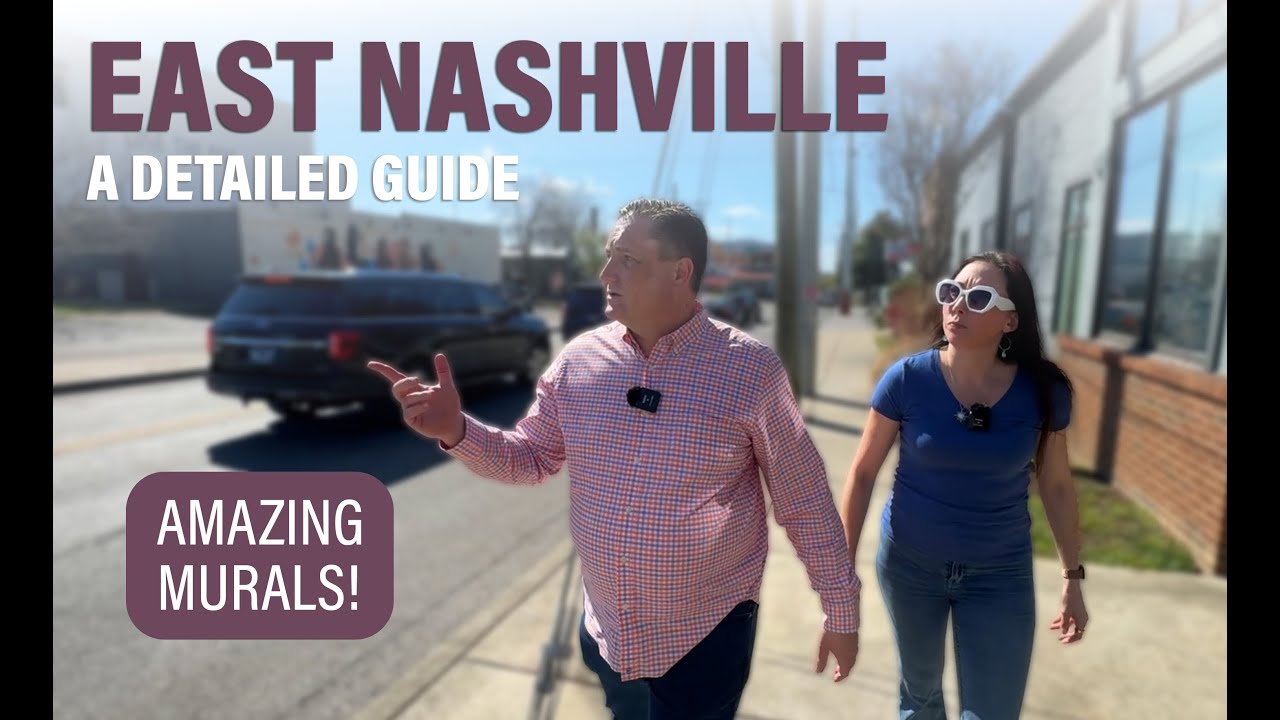
Tour East Nashville with us
Filmed by our team on the ground — see it before you visit.