

From I-40 it looks like one long row of new subdivisions, and a lot of buyers assume that's the whole town. It isn't. Behind the newer rooftops there are older lake-adjacent neighborhoods, rural Wilson County fringes, and condos near Providence — and a $400K house in one of those corners is a completely different animal than a $400K house in the next. Each price band buys its own product and hands you its own trade-offs. This guide is not a brochure. It's the honest version of how you buy here without quietly handing money to the things nobody warns you about until it's too late to walk.
Where You'd Love to Live · 3-Minute Quiz
Is Mount Juliet the one — or is there a better fit you haven't seen?
Three minutes instead of months of research — no sign-up to see your top match.
I'll level with you about why this town is easy to overpay in. Mount Juliet has been built fast, it shows you a lot of new construction, and new construction is engineered to be seen on a sunny Saturday in a furnished model with cookies in the kitchen. The model is doing its job. Your job is the opposite — to find the thing the model is hiding, the lot it's standing on, the builder behind it, the flood line two streets over, the HOA's bank account. Skip it and you find out about the dirt lot next door, or the reserve study, or the Stoners Creek floodplain, after you own it. Let me walk you through the whole thing.
If You're Moving Here From Out of State
Quick orientation, because the geography drives the price map. Mount Juliet sits in Wilson County, roughly 17 miles east of downtown Nashville, strung along I-40 with the Providence Marketplace corridor as its commercial heart and Old Hickory Lake along its northern edge. There's also a Music City Star commuter rail stop in town, which matters more to some buyers than others. The single most important thing for an out-of-state buyer to internalize: 'Mount Juliet' on a listing can mean three very different places. It can mean inside the actual city limits, it can mean a Mount Juliet mailing address that's really unincorporated Wilson County, and it can mean a brand-new subdivision that didn't exist on the last map you looked at. Those distinctions change your taxes, your zoning rules, your utilities, your short-term-rental rights, and sometimes your school assignment. So the relocation move is simple: don't fall in love with 'Mount Juliet.' Fall in love with a specific address, and have a local expert on our team pull the facts on that exact parcel before you get attached. The out-of-towners who lose money here are almost always the ones who bought the idea of the town instead of the reality of the parcel.
What Each Budget Realistically Gets You
We don't publish made-up price tags in this guide, because the internet's numbers date fast and our team would rather pull live comparable sales from the public record for your actual budget than have you plan a move around a stale midnight Zillow estimate. What these bands describe is the product — the kind of house, lot, and trade-off each budget tends to buy in Mount Juliet right now. Read it for shape, then let us price your specific search against real, recent sales.
Entry Mount Juliet
At the bottom of the market you're looking at smaller older homes (1980s-2000s), entry-level townhomes, and condos. New construction at this price point is rare in Mount Juliet today, so most of what you tour here has some age on it — which means this is the band where the inspection matters most, not least. An older entry-level house with a 22-year-old HVAC and a roof on its last few summers can erase your 'good deal' in one autumn.
- 1,400-2,000 sq ft single-family on a small lot, OR
- A townhome or condo.
- Established interior neighborhoods.
- Older mechanicals — budget to verify HVAC, roof, and water heater age before you celebrate the price.
The Middle of the Market
The deepest band of the market. Established subdivisions, mid-range newer construction in outer corridors, and renovated older homes. This is where the most competition lives, which means it's also where buyers most often waive things they shouldn't — inspection contingencies, survey, a hard look at the HOA — just to win. Winning the house and losing the inspection is not winning.
- 2,200-3,000 sq ft, 4 bedrooms, 2-car garage.
- 0.2-0.5 acre lot.
- 2000s-2010s construction in many cases, modern floor plans.
- Quick access to Providence Marketplace, lakes, and major retail.
Upper Mount Juliet
Larger newer-construction homes, premier lots in established subdivisions, and lake-adjacent properties. The premium you pay up here is partly lot, partly build year, and partly the word 'lake' — and 'lake-adjacent' and 'lake access' are not the same thing, a distinction that's cost buyers real money. More on that in the gotchas.
- 2,800-4,000 sq ft, modern open floor plans, primary on main.
- 0.3-0.8 acre lots.
- Community amenities (pools, trails) in many newer planned communities.
- Some homes within walking distance to community boat slips or with lake views.
Premium and Lake-Adjacent
Custom-built homes, premier subdivisions, lake-adjacent properties with community dock access, smaller acreage homes on rural fringes. At this level you're often buying a builder's reputation as much as a house, and the difference between a custom builder with a ten-year track record and one with a slick website is the kind of thing that doesn't show up on a Saturday tour. We'll show you how to check it.
Estate and Premium Lake Access
Larger custom builds on 2-10+ acres, true lake-access homes with private dock permits, and premier Wilson County estate properties. Inventory thins; some homes are shown privately before, or instead of, a public listing. Up here, surveys, easements, frontage, well-and-septic, and Army Corps dock-permit status aren't fine print — they're the deal. A six-figure mistake at this level is a survey nobody ordered.
How the Buying Process Actually Works Here
Mount Juliet doesn't run a wildly different playbook from the rest of Middle Tennessee, but the local rhythm has a few quirks worth knowing before you start, so you're not learning the steps with your earnest money on the table.
- Get fully pre-approved, not pre-qualified. In the middle of the market especially, a strong, verified pre-approval is the difference between an offer that gets read and one that gets skipped. On new construction, also ask whether the builder requires or incentivizes their preferred lender — sometimes the incentive is real money, sometimes it's a worse rate dressed up as a discount, and you want to compare honestly.
- Tour with the parcel facts in hand, not just the photos. Before you write on anything, a local expert on our team pulls the FEMA flood layer, the parcel's jurisdiction (city vs. unincorporated county), the school assignment for that exact address, and on new builds, the builder's prior projects. We'd rather kill a bad house in the driveway than at the inspection.
- Write the offer with the right contingencies for the property type. Resale: inspection, appraisal, survey where it matters. New construction: a real inspection (yes, even on a brand-new house — especially on a brand-new house), plus clarity on what the builder warranty does and doesn't cover. Lake or acreage: time built in for Army Corps dock verification, survey, and well/septic.
- Inspection and resolution period. This is where money is saved or lost. We negotiate from the report, not from feelings. On a fast-built home, the inspection routinely finds the small stuff that compounds — drainage grading, flashing, a rushed HVAC install.
- Appraisal. In a town with this much new construction setting the comps, appraisals can lag or surprise. Have a plan for a gap before you're staring at one.
- Final walk-through and close. On new construction, the walk-through is not a formality — it's your punch-list leverage while the builder still wants the file closed. Use it.
From accepted offer to keys, a clean resale here usually runs about 30-45 days. New construction runs on the builder's calendar, not yours, and 'should be done in spring' has a way of becoming summer. Don't sell your current house, break your lease, or schedule the movers around a builder's verbal timeline. Get it in writing, and pad it.
The Gotchas That Cost Buyers Money — In Detail
Every one of these is something we've watched cost a real buyer real money. None of them show up in a listing photo. All of them are findable before you're committed, which is the entire point of having someone in your corner who's seen them before.
1. Flood zones and the moving FEMA lines
Mount Juliet has real water in it — Old Hickory Lake to the north and a web of creeks through town, including Stoners Creek, Suggs Creek, Spencer Creek, and Cedar Creek. Parts of town fall inside FEMA Special Flood Hazard Areas, and here's the part that catches people: the maps have been revised. The Stones River Watershed FIRM update changed flood lines for some Mount Juliet properties, which means the flood status your seller 'remembers' from a few years ago may be wrong now. Why it costs money: if a home sits in a Special Flood Hazard Area and you're financing, your lender will require flood insurance, and that premium — which can run four figures a year — is a permanent line in your budget that a lot of buyers never priced in. Worse, a property can be partly in and partly out, or have a structure outside the line and a future-addition site inside it. The fix is cheap and boring: before you write, our team pulls the FEMA flood layer for the exact parcel (Mount Juliet even publishes its own flood-zone map tool through the city GIS), and where it's close, we get an elevation certificate into the conversation early. Finding out at the closing table that the home needs flood insurance is how a comfortable payment becomes an uncomfortable one.
2. Short-term-rental rules are not a given — verify before you bank on income
If any part of your math depends on renting the place out on Airbnb or VRBO, stop and read this twice. Mount Juliet does not have a single, clearly posted, easy-to-find short-term-rental ordinance and registration portal the way some Tennessee cities do, and 'I couldn't find a rule against it' is not the same as 'it's allowed.' Tennessee has some state-level protections for existing short-term rentals, but local jurisdictions set their own zoning and permitting, and the rules genuinely differ depending on whether your address is inside Mount Juliet city limits or out in unincorporated Wilson County. Inside the city, short-term-rental and land-use questions run through Mount Juliet Planning and Zoning; outside the city, they run through the Wilson County Zoning Division and, when it comes to it, the County Board of Zoning Appeals — sometimes case by case. Why it costs money: buyers have purchased homes assuming STR income, only to learn the zoning doesn't allow it, an HOA flatly bans it, or the approval is discretionary and slow. That's an investment thesis evaporating after you've closed. The move is to confirm STR rights in writing for your specific parcel and HOA before you remove contingencies — never on the assumption that what worked for someone two towns over works here.
3. Overlay districts, PUDs, and approval delays that stall your plans
Mount Juliet's Land Development Code includes overlay districts (such as the Village Commercial District Overlay) and runs growth through layered approvals — Planned Unit Developments, preliminary and final master development plans, site plans, conditional use permits — and the code restricts certain building materials in places. For most buyers of a finished home this is invisible. It stops being invisible the moment you want to do something: add a detached garage, run a home business, put up a fence or outbuilding, finish that bonus space, or buy a lot and build. Why it costs money: if your parcel sits in an overlay or a PUD with architectural standards, your plans may need review and approval, and approvals take time and sometimes get conditioned or denied. People budget for the project and forget to budget for the calendar — and a stalled permit can mean carrying two housing payments while you wait. Before you buy with a plan in mind, our team checks the parcel's zoning and overlay status and points you to Planning and Zoning so you find out what you can actually do before you pay for the right to do it.
4. New-construction builder track record — the model home is the salesman
Mount Juliet has been built fast, across many communities and a long list of builders, so vet each builder's workmanship. The model home is always immaculate — that's its job. The house they build for you is a different house. Why it costs money: workmanship issues tend to show up in years two through five — drainage that pools against the foundation, HVAC sized or installed in a hurry, trim and flashing details. By then the cookies are long gone and so is anyone's urgency to fix it. So on any new-construction purchase, a local expert on our team pulls the builder's prior-project addresses and you go look at houses they finished two and five years ago, when nobody was trying to impress you. You read their warranty like it's a contract, because it is. And you get an independent inspection on a brand-new home — the single most skipped, most valuable inspection in this town.
5. Old-home mechanicals in the entry band
Down in the entry band, you're often buying age, and age lives in the parts you can't see from the curb. Why it costs money: a 20-plus-year-old HVAC system, a roof near the end of its life, an aging water heater, original wiring or a panel that wasn't built for today's load, and in older or rural homes, well and septic systems — these are five-figure surprises that turn a 'great price' into a wash. The fix isn't to fear old homes; plenty are bought right. The fix is to verify the age and condition of every major system before you waive anything, price the near-term replacements into your offer, and negotiate from that reality instead of the listing's optimism.
6. HOA dues, special assessments, condo warrantability, and reserves
Many newer Mount Juliet planned communities carry HOAs, and condos and some townhomes carry them too — and the monthly due is the least of what you need to know. Why it costs money: a low monthly due on top of a starved reserve fund means a special assessment is coming, and a special assessment can be thousands of dollars landing in your mailbox the year after you move in. On condos specifically, there's a second trap — warrantability. If too many units are rented, or one owner controls too many, or the reserves are too thin, conventional and FHA financing can balk, which limits your future buyer pool and can dent resale. Before any offer in an HOA or condo community, our team pulls the financials, the reserve study, the special-assessment history, the architectural-review record, and — for condos — the warrantability picture. Reading the budget is unglamorous. It's also how you avoid buying somebody else's deferred maintenance.
7. Survey, easements, and frontage — the acreage and lake traps
The bigger and more rural the parcel, the more the boundaries matter, and the less you should trust a fence line or a seller's hand-wave to tell you where your land actually is. Why it costs money: an easement you didn't know about can hand a utility, a neighbor, or the public a right to cross or use part of your land. A frontage shortfall can limit what you're allowed to build or how you can access the property. A boundary that's a few feet off from where everyone assumed can spawn a dispute that outlives your patience and your legal budget. And on lake-adjacent land, 'lake access' versus 'lake-adjacent' versus a Corps-permitted private dock through the Army Corps of Engineers are three different things, and people have paid lake-access prices for adjacent-only reality. The fix on any acreage, rural, or lake property: get a current survey, read the title commitment for easements and encroachments, confirm frontage against what you intend to do, and verify Army Corps dock status independently. It's a few hundred dollars of due diligence against a five- or six-figure mistake.
8. Growth and infrastructure next door
Parts of Mount Juliet are still being built out around you. You'll tour a finished house on a quiet street, and the quiet is partly because the cul-de-sac next door is still a dirt lot with a permit sign on it. That's not a knock — it just means roads, utilities, and traffic patterns are still catching up in places, and the street you buy on today may not be the street you live on in three years. Why it can cost you, at least in regret: people pay a premium for the silence and the view, then watch both get built over. Ask what's platted nearby before you fall in love with the quiet, and price the house on what the street will be, not just what it is at the showing.
The Investor Hat
Several of our team members own rental properties in Middle Tennessee, and we put that lens on every purchase, even for buyers who'd never call themselves investors. For Mount Juliet, the durable value drivers we watch are commute proximity to downtown Nashville (I-40 access, the commuter rail) and genuine lake positioning. The newer-subdivision premium reflects build year more than dirt strength — and dirt is the part that's hard to manufacture. We've helped buyers compare a newer turnkey home against an older home on a stronger lot, run the real numbers, and the math sometimes favors the older home substantially over a decade. We won't predict where prices go — nobody honestly can. What we can do is help you not overpay for the wrong half of the equation.
Common Buyer Profiles
- Relocating from out of state → established or newer subdivisions, with the parcel facts pulled before anyone gets attached.
- Commuting into Davidson County → the middle band, where the eastward I-40 commute is the daily trade.
- Lake enthusiasts → lake-adjacent or true lake-access properties, with dock status verified.
- Move-up local buyers → the upper band, often moving within Wilson County.
- Rural acreage seekers → outer Wilson County fringes, survey and easements front and center.
What to Do Before You Write an Offer
- Drive your actual commute at actual rush hour, from that driveway to that office.
- Walk the specific neighborhood at multiple times of day.
- Confirm the parcel's jurisdiction (city vs. unincorporated county) and pull current school zoning at the specific address.
- Pull the FEMA flood layer for the exact parcel; get an elevation certificate where it's close.
- If STR income is part of the plan, confirm short-term-rental rights in writing for that parcel and HOA — do not assume.
- Check overlay/PUD status and Planning and Zoning rules before counting on any addition or use.
- On HOA or condo: pull financials, reserves, special-assessment history, architectural-review docs, and condo warrantability.
- On new construction: pull the builder's prior projects and get an independent inspection.
- On lake or acreage: get a survey, read the title for easements/frontage, and verify Army Corps dock permits.
- Budget for property taxes assuming meaningful reassessment increases, and for flood insurance if the parcel touches a hazard area.
Quick Questions
Is Mount Juliet in a flood zone?
Parts of it are. Mount Juliet has Old Hickory Lake to the north and several creeks — Stoners, Suggs, Spencer, Cedar — running through it, and some properties fall inside FEMA Special Flood Hazard Areas. The flood maps have also been revised through the Stones River Watershed FIRM update, so an address's flood status can have changed recently. Whether a specific home requires flood insurance is a parcel-by-parcel question; share an address and our team will pull the FEMA flood layer for that exact lot before you write anything.
Can I short-term rent (Airbnb) a house in Mount Juliet?
Maybe — and you have to verify, not assume. Mount Juliet doesn't publish a single, obvious short-term-rental ordinance and registration portal, and the rules differ depending on whether your address is inside city limits (Mount Juliet Planning and Zoning) or in unincorporated Wilson County (the County Zoning Division and Board of Zoning Appeals). An HOA can also ban short-term rentals outright regardless of zoning. If rental income is part of your plan, confirm the rules in writing for your specific parcel and HOA before you remove contingencies.
Should I get an inspection on a brand-new construction home?
Yes — arguably more than on a resale. Mount Juliet has been built fast across a lot of communities, and an independent inspection is where the rushed details show up while the builder still has reason to fix them. It's the single most-skipped, most-valuable inspection in this market. We also pull the builder's prior projects so you can go look at homes they finished two and five years ago.
What's the difference between 'lake-adjacent' and 'lake access'?
A lot of money, sometimes. 'Lake-adjacent' usually means near the water or with a view. 'Lake access' implies a right to reach and use the water, and a private dock requires a permit through the Army Corps of Engineers, and that permit does not transfer to a new owner. Listings use these terms loosely. On any lake property, verify the actual rights and dock-permit status independently before you pay the premium.
How long does it take to buy a home in Mount Juliet?
A clean resale typically runs about 30-45 days from accepted offer to keys. New construction runs on the builder's calendar, which slips more often than it holds, so get every timeline in writing and pad it — don't break a lease or schedule movers around a verbal completion date.
What about schools in Mount Juliet?
School zones in Middle Tennessee are tied to specific addresses, not the city name, and Wilson County's lines have moved in some corridors as the area has grown. Share an address you're considering and our team will pull the assigned schools plus the Tennessee Department of Education report cards, so you can read the official record and decide for yourself.
Read Next
- Living in Mount Juliet TN: the honest day-to-day guide to commutes, the lakes, and what life actually feels like here.
- Mount Juliet TN: where locals actually eat and spend a Saturday — the Providence corridor, the homegrown pizza, and the lake.
Mount Juliet buyer consultation (no obligation)
Call us at 615-265-1000 or book a 30-minute discovery call online. Zero pressure, zero obligation. A local expert on our team will help you figure out which Mount Juliet price band actually fits your goals — and pull the parcel-level facts (flood layer, jurisdiction, builder track record, HOA financials) on any address you're considering, so you buy here without losing money on the things nobody warns you about.
615-265-1000From our YouTube channel
Home tours in Mount Juliet
Filmed by our team on the ground — see it before you visit.
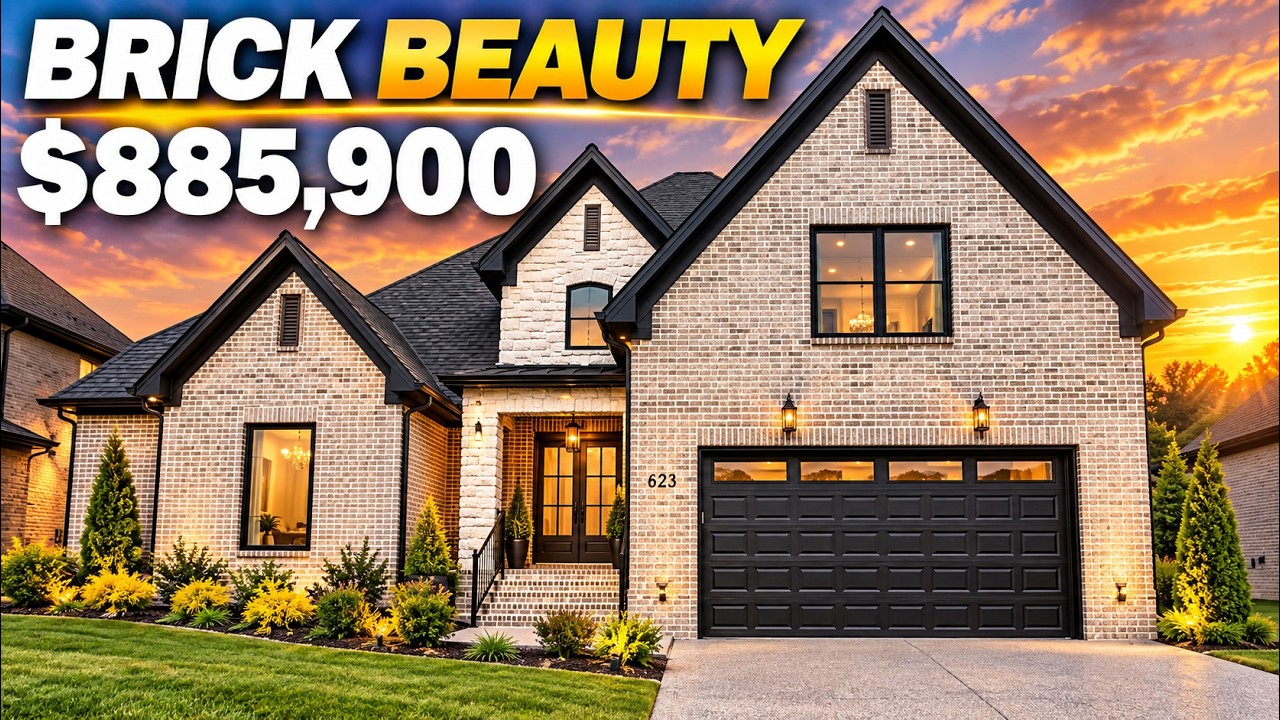
Mount Juliet TN Home Tour - Same Price, Same Size, Different Floor Plan - Where to Live In Nashville

Mount Juliet TN Home Tour - The Ashford With a Florida Room and a Loft - Where to Live In Nashville

Mount Juliet TN Home Tour - $141K More Than the House Next Door - Where to Live In Nashville