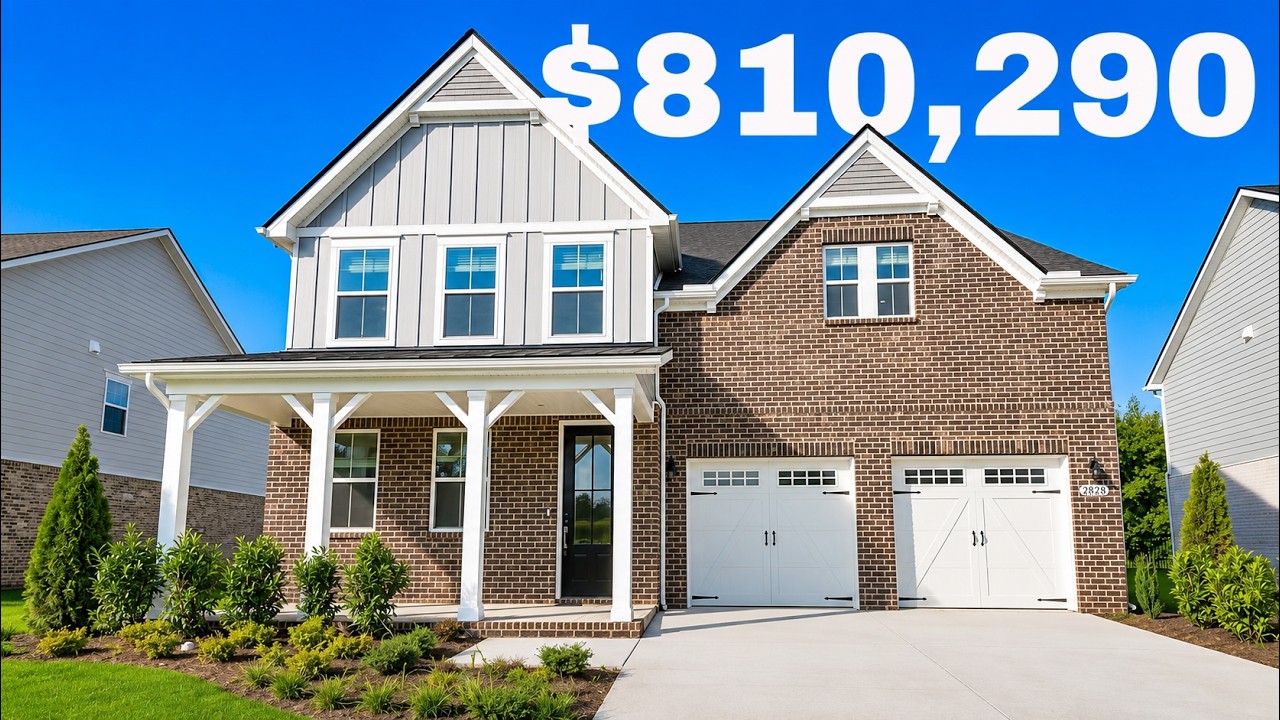


Here is the thing nobody warns you about Franklin: there is no such thing as "the Franklin market." There's a townhome two blocks off Main Street, and there's a fifty-acre place down a gravel road that never touches Zillow, and somehow both have a Franklin address. Westhaven, downtown, Cool Springs, Berry Farms, and rural Franklin each run as their own little market, with their own buyers, their own comps, and their own ways to lose money. Same zip code, completely different game.
Where You'd Love to Live · 3-Minute Quiz
Is Franklin the one — or is there a better fit you haven't seen?
Three minutes instead of months of research — no sign-up to see your top match.
So this guide is about how to actually buy here without leaving money on the table. Not what's pretty. We'll walk what each budget realistically gets you, what the buying process looks like on the ground in Franklin specifically, and then the gotchas — the flood line you can't see, the rental rule that just changed, the historic board that meets once a month, the builder whose three-year-old houses tell on him — and exactly why each one costs buyers real dollars when nobody catches it in time.
If You're Moving Here From Out of State
Start with one mental adjustment: Franklin is its own city, not a Nashville neighborhood. It sits about 20 miles south of downtown Nashville, it's the seat of Williamson County, and it has its own city government, its own zoning ordinance, and its own permitting desk that does not care what the rules are in the town you're leaving. That matters more than it sounds. The flood maps, the short-term-rental rules, and the historic-district approvals we're about to cover are all Franklin's, set by the City of Franklin and Williamson County — not Tennessee-generic, and definitely not whatever your last state did.
Second adjustment: the listing photos are doing a lot of work. Coastal and big-metro buyers tend to land here, see what their money buys, and move fast out of sheer relief. That instinct is mostly healthy — Franklin is a genuinely good place to own a home — but "I can finally afford the pretty one" is exactly the mindset that skips the survey and waves the inspection. The whole point of this guide is to let you move fast on the right house and slow on the right details. Those are two different speeds, and the buyers who lose money confuse them.
What Each Budget Realistically Gets You
These bands are about the product, not a price prediction. We can't tell you where prices go from here — nobody can. We can tell you, honestly, what a given budget tends to buy in Franklin right now and what trade-off you're making at each level.
Entry Franklin
At the bottom of the Franklin market you're typically looking at older interior homes in established subdivisions (1980s–2000s construction), smaller townhomes, and the lower-end Westhaven product. Don't expect much new construction at this level in most parts of the city. The trade you're making here is age and finish: you're buying location and bones, and you'll likely put money into the kitchen and baths. That's fine — just price the updates before you fall for the staging, not after.
- 1,800–2,800 sq ft single-family on a 0.2–0.4 acre lot, OR
- A 1,500–2,200 sq ft townhome in Westhaven, Berry Farms, or an interior community.
- Williamson County or FSSD school zoning, which is tied to the specific address — pull the assigned schools, don't assume.
- Established neighborhoods with mature trees and stable resale comps.
- Often: dated interiors needing cosmetic-to-moderate updates, and on the older end, original mechanicals you'll want inspected hard.
The Middle of the Market
This is the deepest band of the Franklin market. Established suburban subdivisions (Fieldstone Farms, McKay's Mill, Polo Club, and the like), well-positioned Westhaven product, newer Berry Farms construction, and renovated downtown-adjacent homes all sit here. The competition is real in this band, so the discipline that saves you money isn't bidding harder — it's knowing which of two similar houses has the cleaner lot, the funded HOA, and no flood line clipping the back corner.
- 2,800–4,000 sq ft, 4 bedrooms, 3 baths, 2–3 car garage.
- 0.25–0.6 acre lot in established communities.
- Williamson County school zoning (specific zoned schools vary by address).
- Modern open floor plans, primary suite on main in many cases, dedicated office space.
Variables that move price most within this band — and the ones worth paying up for versus the ones that just photograph well:
- Community amenity tier — Westhaven and McKay's Mill currently command premiums for their pool/clubhouse/trail systems, and buyers in this band consistently pay up for that amenity access.
- Lot positioning — cul-de-sac placement, mature tree coverage, drainage, and how the lot sheds water in a hard rain.
- Recent updates — renovated kitchens and primary baths trade at meaningful premiums, but a flip's finishes are only as good as what's behind the drywall.
- School zoning at the specific address.
Premium Franklin
Now you're in higher-end communities, premier Westhaven lots, custom builds on larger Franklin lots, and the better resale homes in established subdivisions. This is also the entry point for downtown Franklin homes within walking distance of Main Street — which is where the historic-district rules below stop being trivia and start being your renovation timeline.
- 4,000–5,500 sq ft custom or semi-custom homes.
- Larger or premium-positioned lots — 0.4–1+ acre with mature landscaping.
- High-end finishes — wide-plank hardwoods, custom millwork, professional kitchens.
- Strong resale liquidity — the heart of the move-up Franklin buyer pool.
Estate-Adjacent Franklin
Custom builds in established communities, larger lots in premier subdivisions, downtown Franklin historic homes that have been thoroughly restored, and the better rural-fringe homes on 2–5 acres. Inventory is thinner and competition for the best product is strong, which is exactly when buyers talk themselves out of the survey to look agreeable. Don't. At this level the dirt and the boundaries are most of what you're buying.
- Builder reputation matters more. Some builders are excellent; some are not. We pull prior-project addresses on any new-construction or custom purchase and go look at them.
- Historic-district rules apply to downtown Franklin homes — exterior changes go through the Historic Zoning Commission, on its schedule, not yours.
- Resale at this level is good but slower than the busier mid bands; plan your hold accordingly.
Estate Franklin
True estate homes on 5–50+ acres, premier downtown Franklin landmarks, premier master-planned-community homes, and a handful of custom builds with serious land. Inventory is sparse, and some homes at this level are shown privately before, or instead of, a public listing — and the diligence (survey, septic, well, access, easements) is the whole ballgame.
- Survey and title work — estate lots in rural Williamson County sometimes carry boundary, easement, or access surprises that a clean-looking listing won't mention.
- Septic and well systems require their own inspection process; a failed field or a low-producing well is a five-figure-plus problem.
- Builder track records at the high end vary widely — we can walk you through prior projects from specific builders.
- Resale at the estate level takes the right marketing and patient timing, which is a buying decision, not just a selling one.
The Buying Process in Franklin — What Actually Happens, and When
The mechanics aren't exotic, but the order and the timing are where money gets saved or lost. Here's the honest sequence for a financed purchase in Franklin, with the spots that matter flagged.
- Get fully pre-approved before you tour — not pre-qualified, pre-approved with documents reviewed. In the competitive mid bands, a soft pre-qual gets you beaten by buyers who did the homework. Cash or strong financing wins ties.
- Tour with the gotchas already in mind. Before you fall for a kitchen, we're quietly checking the flood designation, the HOA, whether it's in the historic overlay, and the builder if it's new. Most of that we can pull before you ever pull into the driveway.
- Write the offer with the right contingencies intact. The inspection, appraisal, and (where relevant) survey and HOA-document review contingencies are your money-protection clauses. Waiving them to win is sometimes the move — but it's a decision you make on purpose, with the risk priced, not a reflex.
- Open escrow and order inspections fast. Your inspection window is short and it's running. General inspection always; add a sewer scope on older homes, a septic and well inspection on rural property, and a separate look at HVAC, roof, and foundation on anything with age.
- Review the title commitment, survey, and any HOA/condo documents during your contingency period — not after. This is where easements, encroachments, special assessments, and pending litigation show up. Reading them late is how a closed deal becomes a regret.
- Appraisal and final loan approval. In hot bands an appraisal can come in under contract price; know in advance whether you'll bring cash to the gap, renegotiate, or walk.
- Final walkthrough, then close. Confirm agreed repairs were actually done and nothing new broke between contract and closing.
The whole thing typically runs 30–45 days from accepted offer to closing on a financed purchase, faster on cash. The expensive mistakes almost all happen because someone let a contingency lapse to look easygoing. Easygoing is not a real estate strategy.
The Gotchas — and Exactly How Each One Costs You Money
1. The Flood Line You Can't See (Harpeth River + FEMA)
Franklin sits in the Harpeth River watershed, and the river and its tributaries flood in big storms. A meaningful number of properties in the city are mapped by FEMA inside the floodplain, and the listing photos will never show you the line. The designations that matter: Zone AE is the high-risk 100-year floodplain (1% annual chance), Zone X-shaded is the moderate-risk 500-year zone (0.2% annual chance), and Zone X is minimal risk.
Why it costs you money, concretely: a standard homeowner's policy does not cover flooding, so a Zone AE property usually needs separate flood insurance, and if you're financing, your lender will require it — that's a recurring annual cost that should be in your math before you offer, not a surprise at closing. Flood coverage also has a 30-day waiting period, so it's not something you bolt on the day you close. And flood-zone properties generally sell at a discount to comparable homes outside the zone, which cuts both ways: you might pay less, but you'll also sell to a buyer running the same math, so price it in honestly on the way in. The good news is checking is free — the City of Franklin's Floodplain Manager (615-550-6631) will make a flood-zone determination for any property in the city, and we pull it as a matter of routine. Skipping that call is how people find out at the insurance quote, which is far too late to renegotiate gracefully.
2. Short-Term-Rental Rules That Changed the Math (and Don't Transfer)
If part of your plan is renting the place out on Airbnb or VRBO, read this before you offer, because Franklin's short-term-rental rules are strict and they are the kind of thing that quietly kills a pro forma. To operate a short-term vacation rental (stays under 30 days) inside the city you need a permit from the City of Franklin. Among the requirements under the City of Franklin's short-term rental rules (confirm the current ordinance for your address, since these get updated): the owner generally must live at the property (owner-occupancy), only one short-term rental is allowed per lot, you have to show proof of septic approval where applicable, carry insurance, pass a compliance inspection, and meet occupancy, parking, and noise standards — and the compliance certificate is good for 12 months and has to be renewed.
Here's the part that costs unprepared buyers the most: a prior owner's permit does not automatically come with the house. Legally established rentals are generally grandfathered under the rules in place at the time — but that status ends when the property is sold or transferred (and also if it sits unused as a short-term rental for an extended period or racks up repeated violations). So a listing that says "successful Airbnb" can be telling the truth about the seller and still be worthless to you the day you take title, because the clock resets at the sale. Underwriting a purchase on rental income that legally evaporates at closing is one of the most expensive assumptions a buyer can make in this city. Confirm permit-ability for your specific use and address with Franklin Planning (615-791-3217) before the money's at risk — not after.
3. The Historic Overlay and the Board That Meets Once a Month
Buy a home inside Franklin's Historic Preservation Overlay — most of the homes within walking distance of Main Street — and exterior changes go through review. The Historic Zoning Commission, a nine-member citizen board, reviews exterior alterations in material or design against the city's adopted Historic District Design Guidelines, the zoning ordinance, and the Secretary of the Interior's Standards, and issues a Certificate of Appropriateness (COA). Minor stuff can sometimes get an administrative COA from the preservation planner; the bigger items wait for the commission, which meets monthly.
Why it costs money: this is a big part of why historic Franklin has kept its architectural character — and genuinely frustrating in the short term. Windows, paint colors, fences, additions, even some material swaps you'd consider routine can require a COA, and because the full commission meets monthly, a single approval can add 30–60+ days to a project before a contractor lifts a tool. Buyers who don't know this budget a spring renovation and find themselves still waiting on a COA in summer, paying to hold a house they can't yet change. We brief every downtown buyer on the overlay before they write, so the timeline is a plan and not a surprise. Confirm whether a specific address is in the overlay before you assume you can swap those windows.
4. The Builder's Three-Year-Old Houses Tell on Him
Franklin builds a lot of houses, and workmanship varies, so check every builder's older homes. The new-home market here is deep (active builders include names like Goodall, Drees, and a long list of custom shops), and a brand-new house with a builder warranty feels like the safe choice. Sometimes it is. But a one-year fit-and-finish warranty doesn't help much if year-two problems were baked in.
So here's the unglamorous thing we actually do: we drive a builder's three-year-old homes and look at how the trim has held up, whether the driveways are cracking, how the grading drained, whether the caulk lines are failing. It is not a fun Saturday. It has also caught five-figure year-one problems before our buyers ever signed. On any new build, get an independent third-party inspection during construction and again before closing — yes, even on a brand-new house, especially on a brand-new house — and read the warranty for what it actually covers versus what it quietly excludes. The builder's own walkthrough is not a substitute for your own inspector. Skipping that is how a buyer inherits a drainage problem the builder will spend a year not returning calls about.
5. Old-Home Mechanicals (the Entry-Band Tax Nobody Quotes You)
Down in the entry band and in the older established subdivisions, the house can be charming and the mechanicals can be original. HVAC systems, water heaters, roofs, and electrical panels all have a lifespan, and a 1990s system at the end of it is a known, dateable expense — it just isn't on the listing sheet. Sewer lines on older homes are the sleeper: a sewer scope is a cheap add to your inspection and it catches root intrusion and collapsed lines that cost five figures to dig up. The move here isn't to fear old homes; it's to price the replacements you can see coming and use them in the negotiation, instead of discovering them in your first winter.
6. HOA and Condo Dues, Special Assessments, and Warrantability
Westhaven, Berry Farms, McKay's Mill, and many Franklin master-planned communities carry HOA structures with real annual costs and architectural-review obligations. The dues are the part you see. The parts that bite are the ones you have to ask for: pull the financials and reserve study, the recent meeting minutes, and the special-assessment history before you offer. An underfunded reserve means a special assessment is a question of when, not if, and a few thousand dollars can land in your lap the year after you close.
For condos specifically, there's a second, sneaky cost: warrantability. If too much of a building is investor-owned or rented, or the HOA is in litigation or carries inadequate insurance, conventional and FHA/VA financing can be restricted or denied — which means you may need a bigger down payment or a different loan, and your eventual buyers will hit the same wall, hurting resale. We pull the HOA/condo documents and the warrantability picture during the contingency window, on purpose, because finding it after closing is how a 'great deal' on a condo turns into a financing trap.
7. Survey, Easements, and Frontage (Especially Rural and Estate)
On larger Franklin lots, rural-fringe property, and estate land, the boundaries are a real question. A current survey is the only thing that actually tells you where your lines are, what easements run across your land (utility, drainage, shared-driveway, access), and whether the frontage and access you're picturing legally exist. Listings describe acreage cheerfully and easements not at all. The way this costs money is specific: a shared-driveway or access easement can limit what you build and turn into a neighbor dispute; a utility or drainage easement can sit right where you wanted the pool; and a frontage or access problem can quietly cap the lot's future value. On anything rural or estate-grade, get the survey and read the title commitment's exceptions during your contingency period. It is far cheaper to learn this before you own it than to litigate it after.
Quick Questions
How do I find out if a Franklin house is in a flood zone?
Check the FEMA flood maps, and use Franklin's own resource: the City's Floodplain Manager (615-550-6631) will make a free flood-zone determination for any property in the city. We pull this as a matter of routine on every property we tour with you. The reason to do it early is money — a high-risk (Zone AE) designation usually means required flood insurance if you're financing, plus a 30-day waiting period on coverage, and it affects resale. Better to know before you offer than at the insurance quote.
Can I run a short-term rental (Airbnb) on a house I buy in Franklin?
Maybe — but don't assume, and don't underwrite the purchase on it until it's confirmed. Franklin requires a city permit for short-term rentals (stays under 30 days), generally requires the owner to live at the property, allows only one per lot, and adds inspection, insurance, septic-approval, occupancy, parking, and noise requirements with an annual renewal. Critically, a prior owner's permit usually does not transfer to you at sale — grandfathered status tends to end when the property changes hands. Confirm permit-ability for your specific address with Franklin Planning (615-791-3217) before you commit money to a rental plan.
What's the historic-district approval process, and how long does it take?
If a home is in Franklin's Historic Preservation Overlay (much of downtown), exterior changes need a Certificate of Appropriateness. Minor items can sometimes be approved administratively; larger ones go to the Historic Zoning Commission, which meets monthly. Plan for a single approval to add roughly 30–60+ days before work starts, and check the design guidelines before assuming you can change windows, paint, fences, or add on. It protects long-term value, but it's a real timeline — budget it.
Is new construction safer than buying an older Franklin home?
Not automatically. New builds carry a warranty and avoid old mechanicals, but builder quality in Franklin runs the full range, and a warranty only helps with what it actually covers. On any new build, get an independent third-party inspection during construction and before closing, read the warranty's exclusions, and look at the builder's older homes to see how the work has aged. Older homes are fine too — you just price the mechanicals you can see coming (HVAC, roof, sewer) and use them in the negotiation.
What about schools?
School zones in Middle Tennessee are tied to specific addresses, not to the city name, and Franklin includes both the Franklin Special School District (K–8) and Williamson County Schools depending on the address. Share an address you're considering and a local expert on our team will pull the assigned schools and the official Tennessee Department of Education report cards, so you can read the record and decide for yourself.
How long does it take to buy a house in Franklin?
On a financed purchase, plan on roughly 30–45 days from accepted offer to closing, faster on cash. The part that saves you money isn't speed — it's using your contingency windows (inspection, appraisal, title/survey, HOA documents) fully instead of waiving them to look easygoing. Those clauses are your money-protection. Waive them on purpose if you must, never by reflex.
Before You Write an Offer — The Short Checklist
- Get fully pre-approved, with documents reviewed, before you tour.
- Pull the flood-zone determination (FEMA + Franklin's Floodplain Manager, 615-550-6631) and price any required flood insurance.
- If a rental is part of the plan, confirm short-term-rental permit-ability for the specific address with Franklin Planning (615-791-3217) — and don't count income that doesn't transfer.
- Check whether the home is in the Historic Preservation Overlay; if so, read the design guidelines and budget the COA timeline.
- On new construction: pull the builder's prior projects, drive a few, and line up an independent inspector for during-build and pre-closing.
- On older homes: budget HVAC, roof, electrical, and a sewer scope; use what you find in the negotiation.
- On any HOA/condo: pull financials, reserves, minutes, special-assessment history, and (for condos) warrantability before you offer.
- On rural or estate property: order a current survey, read the title exceptions, and verify septic/well and legal access.
- Drive your actual commute at the actual rush hour, and walk the specific street at 6 p.m. Wednesday and 11 a.m. Saturday.
- Pull school zoning for the specific address and read the official report cards yourself.
Read Next
- Moving to Franklin TN: An Honest Local's Guide for 2026 — what daily life actually looks like across downtown, Westhaven, Cool Springs, and the rural fringe, with the honest trade-offs.
- Franklin TN: Where Locals Actually Eat, Drink, and Spend Saturdays — the local rotation, not the tourist list, for getting a real feel for the place before you buy.
Franklin buyer consultation (no obligation)
Call us at 615-265-1000 or book a 30-minute discovery call online. Zero pressure, zero obligation. A local expert on our team will pull the flood designation, HOA financials, builder track record, and short-term-rental rules for any Franklin property you're weighing — and tell you honestly which submarket and price band actually fit your budget, including the listings worth seeing this week.
615-265-1000From our YouTube channel
Home tours in Franklin
Filmed by our team on the ground — see it before you visit.