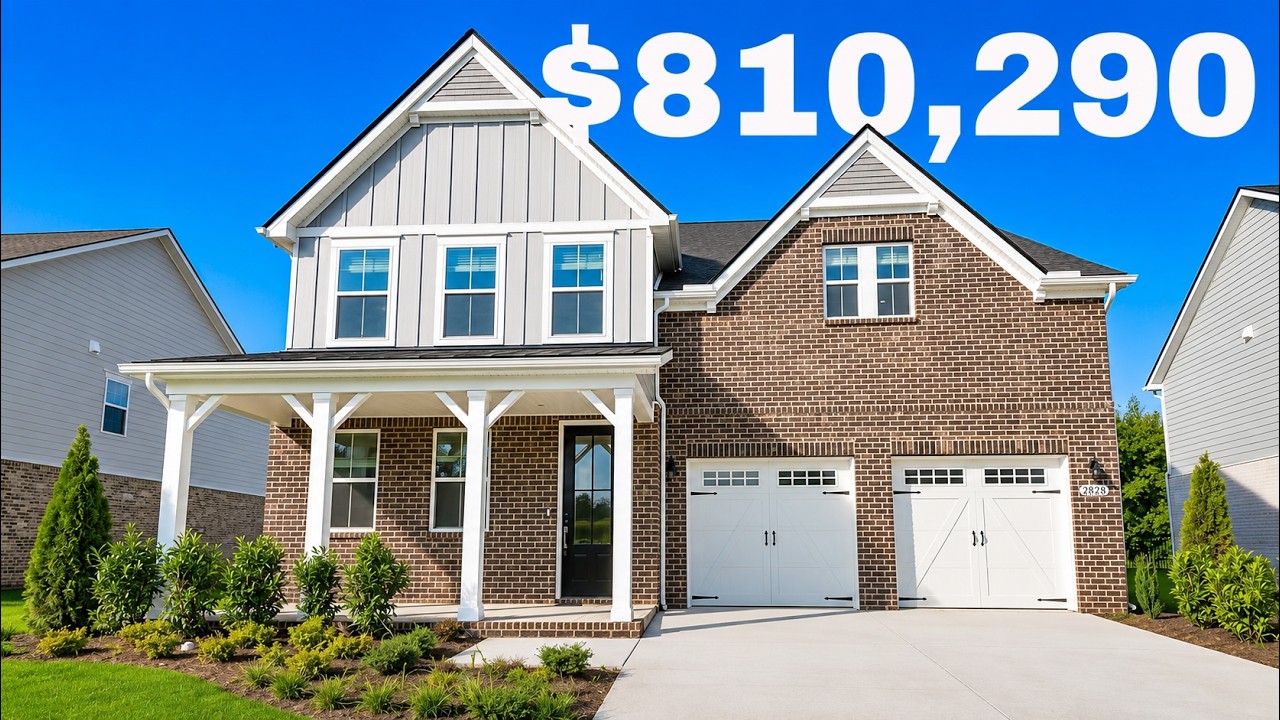


There is a photo of downtown Franklin that everyone moving here has already seen. Brick sidewalks, Victorian storefronts, string lights, a couple holding coffee in front of the Franklin Theatre marquee. It is a real place. You can stand on that exact corner of Main Street and take that exact picture. What the picture does not tell you is that the same 16 blocks were the center of one of the bloodiest afternoons of the Civil War, that the parking on a Saturday will test your marriage, and that 'living in Franklin' can mean a townhome four minutes from a mall food court or a house on five acres where the nearest streetlight is a rumor.
We have walked buyers through every version of this city. The thing we say most often is the same thing: Franklin earns the postcard. It also has a daily-life reality the postcard skips. This guide is the reality — where it sits, what a normal Tuesday actually feels like, who tends to be glad they came, and the trade-offs worth knowing before you write the check.
If You're Moving Here From Out of State
Start with the map in your head, because the map in your head is probably wrong. Franklin is the county seat of Williamson County, roughly 20-some miles south of downtown Nashville. The thing that organizes the whole city is Interstate 65, which runs down Franklin's eastern edge like a spine. Everything commercial — the offices, the big retail, most of the chain dining — clusters along I-65 in an area called Cool Springs. Everything historic — Main Street, the public square, the 1800s architecture — sits a few miles west of the interstate. So the first mental adjustment is this: the pretty part and the practical part of Franklin are not the same part, and you will drive between them constantly.
Daily life, honestly told: Franklin runs on its own clock, separate from Nashville. The downtown historic district is genuinely walkable for about a 16-block stretch around the public square — you can park once and spend a whole evening on foot, dinner to a show at the Franklin Theatre to a nightcap, never touching your car. Outside that core, Franklin is a driving city, full stop. You drive to the grocery store. You drive to the trailhead. You drive your kid to the park. That is not a knock; it is most of suburban America. But if you are coming from a place where you walked to everything, or from a place where you drove on a 12-lane freeway and laughed at the idea of 'traffic' here, both of you are in for a recalibration. The walkers will miss the convenience. The big-city drivers will be genuinely surprised that a two-lane road can back up the way Hillsboro Road backs up.
Who it fits: people who want a real, intact small-town center with actual history attached — not a developer's nostalgia set, but a National-Register district where the building you're eating dinner in was a drugstore for a hundred years before it was a restaurant. People who are fine trading walk-to-everything urban convenience for space, quiet streets, and a downtown they visit on purpose. People who work along the I-65 corridor (Cool Springs, Brentwood, south Nashville) and want a short, sane commute. People who like the idea of a town that throws a festival roughly every time the weather is nice.
The honest trade-off: Franklin is in demand, and demand has a price and a pace. Inventory near the walkable core is thin. The commute to actual downtown Nashville is longer and less predictable than your map app promises at 2 p.m. on a Sunday — we'll get specific on that below. And the same Main Street that sold you on the place fills up with visitors on weekends and event days; the version of downtown you fell for on a quiet weekday morning is not the version you'll meet on a Saturday at noon. None of that is a reason not to come. It is a reason to come with your eyes open.
The Geography, and Why It Decides Your Whole Life Here
'I'm moving to Franklin' is about as specific as 'I'm moving to Texas.' The city covers a lot of ground, and the part you land in determines your commute, your weekends, and how often you actually use that walkable downtown you're paying for. Here is how a local reads the map.
Downtown / the Historic District
The 16-block district north, west, and south of the public square — listed on the National Register of Historic Places in 1972 — is the Franklin of the postcards. Commemorative brick sidewalks, Victorian architecture, Main Street running through the middle of it. This is the only genuinely walkable pocket of the city, and it is small. Homes within true walking distance of the square exist but are scarce and expensive per foot, and many sit inside historic-zoning rules that govern what you can change on the exterior. If your dream is to walk to dinner, this is the dirt that delivers it — and the dirt you'll fight for.
Cool Springs (the I-65 corridor)
Franklin's commercial engine, strung along Interstate 65 in the eastern part of the city. This is where CoolSprings Galleria — the enclosed super-regional mall that opened in 1991 at the I-65 and Moores Lane interchange — anchors a dense cluster of retail, offices, and dining. Living near Cool Springs means newer construction, fast interstate access, and a five-minute drive to basically any errand you can name. It also means living next to heavy traffic. The trade is convenience for calm.
Established Suburban Franklin
The broad middle of the city: subdivisions built mostly from the 1990s onward, cul-de-sacs, neighborhood pools, two-car garages. This is where most of Franklin actually lives, and where most of the 'normal' housing inventory sits. You trade walkability and historic character for space and a yard. Many of these communities carry an HOA — pull the financials before you fall for the entryway landscaping.
Rural Franklin and the Edges
Push past the denser core and Franklin dissolves into rural Williamson County — acreage, long driveways, some of the highest-end estates in the region tucked down roads you'd never find on purpose. Quiet is the product here. So is distance: every trip is a real drive, and the conveniences you took for granted in Cool Springs are now a project. People who buy out here usually know exactly what they're buying and consider the drive a feature.
Daily Life: A Real Week in Franklin
Listings show you the house. They don't show you the Tuesday. Here's the texture of an actual week, the stuff only a local thinks to tell you.
Mornings
If you want the full Franklin morning, you go downtown. Puckett's Grocery & Restaurant at 120 4th Avenue South is the heart of it — the first full-service Puckett's, open since 2004, the concept having started as a little grocery over in Leiper's Fork. Breakfast at Puckett's is the Southern thing done right: biscuits, eggs, the kind of plate that makes lunch optional. It is also genuinely beloved by people who live here, not just the people passing through, which is the test that matters. Order breakfast, get the biscuits, and accept that the room will be loud and the coffee will keep coming. On the practical side, your real morning errand life happens at one of the several Publix supermarkets around town — there's one at 1021 Riverside Drive, plus locations on Fieldstone Parkway, Carothers Parkway, and in the McKays Mill Village Center on Liberty Pike. Confirm the one nearest any house you're considering; in Franklin, which Publix is 'yours' is a more important question than it sounds.
Workdays and the Commute
Here is the number that matters most, so let's be honest about it. To downtown Nashville, your map app will quote you something cheerful — 25 minutes, give or take — and that number is real exactly when you don't need it to be. Drive I-65 north at 8 a.m. on a weekday and the cheerful number becomes a wince. The interstate carries the whole region's southern commute, and Cool Springs traffic feeds right into it. If your job lives in downtown Nashville and you need to be at your desk at a hard 8:00, drive that commute at 7:45 on a Tuesday before you buy anything, not after. If, on the other hand, you work in Cool Springs, Brentwood, or south Nashville, the math gets easy fast and Franklin starts to look like a genuinely short commute. The surface roads matter too: Moores Lane (that's State Route 441) ties I-65 over to U.S. 31 / Franklin Road, Hillsboro Road and Murfreesboro Road (State Route 96) cut through town, and any of them can knot up at the wrong hour. I have spent more time than is reasonable thinking about the timing of the Highway 96 interchange, and I am not even sorry. The takeaway from all that thinking: in Franklin, what time you leave is a bigger decision than which road you take.
Evenings
Downtown is where Franklin's evenings live. Gray's on Main, at 332 Main Street, is the one to know — a building from 1876 that spent the better part of a century as the town's pharmacy and drugstore before a 2013 restoration turned it into a restaurant and live-music venue. You get seasonal Southern fare and cocktails downstairs and music upstairs, all inside a room with genuine bones. The other anchor is the Franklin Theatre on Main Street, a restored historic theater that now runs as a multi-use venue — touring musicians one night, an old movie the next. The move on a good evening is to park once near the square, eat, catch whatever's playing, and walk it all. That single-park, walk-everything evening is the thing downtown Franklin does that almost nowhere else in the metro can, and it's worth the premium for the people who'll actually use it.
Weekends
Franklin's park system is its quiet superpower, and the standout is The Park at Harlinsdale Farm, just north of downtown. It was a working Tennessee Walking Horse farm — W.W. Harlin established it in 1933 — and the city turned it into a park without sanding off the character. Soft walking trails, open fields, a dog park, a catch-and-release fishing pond, room to do nothing on purpose. Closer to the square, Pinkerton Park sits along the Harpeth River with trails, playgrounds, and a footbridge that connects toward Fort Granger; Bicentennial Park is the northern trailhead of the Franklin greenway, with a Harpeth River overlook and fishing access, and the greenway runs from there out toward the recreation center. Jim Warren Park handles the city's sports-field and big-recreation needs. The Harpeth River itself runs right through Franklin, and once you've lived here a season you start orienting your weekends around it.
The History You'll Be Living Inside Of
This is the part most relocation guides skip, and it's the part that makes Franklin genuinely different from every other suburb you're comparing. The Battle of Franklin, fought on November 30, 1864, was one of the Civil War's most devastating single days, and the whole town is still wrapped around it. The Carter House, built in 1830, served as a U.S. Army headquarters during the battle and is now a Battle of Franklin Trust museum, open daily for roughly hour-long guided tours with arrival between 9 a.m. and 4 p.m. Carnton, the 1826 McGavock plantation home, was at the center of the battle's aftermath and runs on the same daily tour schedule, with a combination ticket that pairs it with the Carter House; the McGavock Confederate Cemetery sits beside it. The Lotz House operates as another battle-era house museum downtown — confirm its current hours directly before you plan a visit. Beyond the museums, the history is woven into the city's parks: Fort Granger is a preserved Civil War earthen fortification that's now a city park, Eastern Flank Battlefield Park preserves part of the actual battlefield near Carnton, and Winstead Hill is the overlook tied to the battle. Franklin also holds Hiram Masonic Lodge No. 7, a U.S. National Historic Landmark. Living here means your weekend walk might cross ground that's in the history books. Some people find that profound. Some find it just makes for a good Saturday. Either way, it's real, and it's not a thing the next subdivision over can manufacture.
What's Honestly Difficult About Franklin
The walkable part is small, and you pay for it
The downtown historic district delivers true walk-to-everything living for a 16-block radius and basically nowhere else in the city. Inventory inside that radius is thin, and many properties sit under historic-zoning rules. If walkability is your non-negotiable, know that you're competing for a small, expensive pool of homes.
Weekend and event-day crowds are real
The same Main Street that sold you fills with visitors on weekends and during the city's heavy festival calendar. If the picture in your head is a serene historic square that belongs to you, you're picturing a weekday morning. Saturday at 11 a.m. is a different downtown, and the parking will be the first to tell you.
It's a driving city outside the core
Cool Springs congestion and I-65 traffic are genuine daily-life factors, not occasional ones. Most of your week involves a car, and the difference between a 12-minute errand and a 25-minute one is often just what time you left. Out on the rural edges, every trip is a commitment.
Two school districts, tied to addresses
School zoning in Middle Tennessee is tied to specific addresses, and within Franklin's city limits more than one district can apply depending on where a house sits and the grade level. We don't make quality claims about any school. When you share an address, our team will pull the assigned schools and the Tennessee Department of Education report cards so your family can decide against your own priorities. Settle this before you tour, not after you've fallen for a house.
Quick Questions
How far is Franklin from downtown Nashville?
Roughly 20-some miles, straight up I-65. Off-peak it's around a 25-minute drive; at a weekday rush hour, plan on meaningfully more and don't be shocked if it nearly doubles. The honest rule: judge the commute by driving it at the actual time you'd actually need it, not at noon on a Sunday.
Is Franklin walkable?
The downtown historic district is — genuinely so, for about a 16-block stretch around the public square, where you can park once and spend an evening on foot. The rest of the city is car-dependent like most American suburbs. If walkability is the goal, you're shopping a small, premium pocket near Main Street.
What is there to do in Franklin?
Downtown built around the Franklin Theatre and a real food-and-music scene; deep Civil War history you can tour at the Carter House, Carnton, the Lotz House, Fort Granger, and Eastern Flank Battlefield Park; a strong park system led by The Park at Harlinsdale Farm, Pinkerton Park, and the Harpeth River greenway; and a busy year-round festival calendar. For shopping and big-box errands, the Cool Springs corridor and CoolSprings Galleria cover it.
What is Franklin near?
It sits at the south end of the Nashville metro, with Brentwood directly to the north between Franklin and Nashville, and the Cool Springs commercial corridor bridging the two along I-65. Nashville's airport and downtown are a drive up the interstate; smaller Williamson County towns ring the rural edges.
Does it feel expensive to live in Franklin?
It feels like a high-demand market, because it is one. Housing near the walkable core carries a clear premium. The everyday cost-of-living texture — groceries at the several area Publix stores, the usual Cool Springs retail — feels like standard suburban Middle Tennessee. The premium you're really paying is for the location and the historic core, not the gallon of milk.
Franklin or Brentwood? A Fit Question, Not a Ranking
The two cities people most often weigh against each other are Franklin and Brentwood, its neighbor directly to the north along I-65. Neither is 'better' — they solve for different lives. Brentwood sits closer to Nashville and reads as a quieter, residential, large-lot suburb without a historic downtown of its own; its center of gravity is the home and the commute, and that proximity to the city is its core appeal. Franklin trades a little of that Nashville closeness for something Brentwood doesn't have: a genuine, intact, walkable historic downtown with a National-Register district, a real food-and-music scene, and centuries of history you can tour on a Saturday. If your priority is the shortest path to Nashville and a quiet residential feel, you'll want to look hard at Brentwood. If you want a town with a beating downtown heart and history attached, Franklin is the one. Most buyers know which of those two sentences is theirs the moment they read them.
Read Next
- Franklin TN: Where Locals Actually Eat, Drink, and Spend Saturdays — the honest rotation, including the spots residents love that tourists never find.
- Buying in Franklin TN: Price Points Explained — the real price bands across downtown, Cool Springs, established suburbs, and the rural edges, plus the gotchas we walk every buyer through.
- Brentwood vs. Franklin TN: Which Should You Choose? — a side-by-side on the two cities buyers most often compare, framed as fit rather than winner.
Here's the honest bottom line. A real estate decision can move a family's financial trajectory by tens of thousands of dollars, and Franklin is exactly the kind of in-demand market where it's easy to fall for the postcard and overpay for the wrong version of it. We'd rather spend 30 minutes talking you into the right part of Franklin — or honestly out of Franklin entirely — than help you write an offer you regret in year two. The streets, the trade-offs, the commute timing, the public data on any property: those translate when you're standing on the block, not scrolling listing photos.
Want a real Franklin tour?
Call 615-265-1000 and a local expert on our team will walk Franklin with you — the postcard downtown, the parts you've never heard of, the commute math, and the public data on any property you're weighing. You decide what fits how you actually want to live.
615-265-1000From our YouTube channel
Home tours in Franklin
Filmed by our team on the ground — see it before you visit.