
White House is named after a house. Not the famous one. A two-story stagecoach inn that a man named Richard Stone Wilks built in 1829, painted white, right where the old Louisville-to-Nashville trail crossed through what is now the top edge of the Nashville metro. Travelers heading south would say they were stopping at 'the white house,' the way you'd say you were stopping at the red barn, and the name just stuck to the whole town and never let go. I've had out-of-state buyers assume the name is some developer's idea of aspirational branding. It is the opposite of that. It's the most literal name in Middle Tennessee. There was a house. It was white. Here we are.
We've walked buyers through White House who fell in love with it and buyers who realized in the first twenty minutes it wasn't their move, and the deciding factor is almost never the houses. It's the drive. White House is a commuter town on the northern growth edge of Nashville, and whether it works for you comes down to how you feel about I-65 at 7:45 on a Tuesday. So that's the conversation we're going to have honestly, along with what daily life actually feels like once the moving truck leaves.
If you're moving here from out of state
Start with the map, because White House sits in a genuinely unusual spot. It's an incorporated city straddling the line between Sumner County and Robertson County — the county line runs right through town, which means one side of a street can be in one county and the far side in the other. That's not trivia. Your tax bill, your county clerk, and your address-based school zoning all depend on which county a specific house lands in, not on the 'White House' on the city sign. People moving from out of state assume a city is a city. Here, the city is one thing and the county underneath it is another, and the county underneath it changes depending on where you're standing.
Geographically, you're about 25 miles and roughly 30 minutes north of downtown Nashville, straight up Interstate 65. The town grew up around a crossroads — the junction of US Highway 31W and State Highway 76 — and that old 31W corridor is the same buffalo-and-stagecoach trail the 1829 inn sat on. Today the city's front door is I-65 Exit 108, the TN-76 / Springfield exit. That's the exit you'll learn first, because almost everything that matters — the grocery anchors, the new retail, the on-ramp to your commute — clusters around the Highway 76 corridor near that interchange. ZIP code 37188 covers the whole thing.
What's daily life actually like? Small-town, residential, and car-based, with a freshly built layer of suburban convenience laid over a town that's been here since 1829. You will drive to most things, but the things are close and getting closer — a full Kroger at 510 Highway 76, a newer Publix-anchored shopping center over at Raymond Hirsch Parkway and Highway 76, a Walmart, the everyday hardware-and-feed-store stuff (Tractor Supply, Ace Hardware), and the coffee-and-errand layer (Dunkin', Walgreens, the dollar stores). It is not a walkable downtown grid. It's a town you move through by car, where the trips are short and the parking is free and nobody is fighting you for it.
Who does it fit? Buyers who want more house and more yard for the money than they'd get closer in, who don't need a walkable nightlife block, and whose work life can absorb a 30-plus-minute commute — or skip it entirely because they're remote. The honest trade-off, and I'm going to keep saying it because it's the whole ballgame: you're trading drive time for space and price. If a half-hour-plus each way would quietly wear you down, you'll feel that long before you ever enjoy the bigger garage. Better to know that in week one than month six.
Where White House actually sits
Picture I-65 running north out of Nashville. You pass Goodlettsville, you pass the Sumner County line, and White House is the next real town on the interstate before the road carries on toward Springfield and the Kentucky line. It's the northern edge of where Nashville's growth has reached — close enough to be a true commuter town, far enough out that the price of a house drops and the size of the lot goes up.
Inside the town, two roads do most of the work. Highway 76 (TN-76) is the main east-west spine — it carries the Kroger, the Publix center, the retail buildout, and the path to Exit 108. US 31W (the old Dixie Highway corridor) is the historic north-south route the town was originally strung along, the one with the 1829 history baked into it. Where those two cross is the old heart of White House. The new heart, honestly, is wherever the newest shopping center opened, and over the last few years that's been creeping along the 76 corridor toward the interstate.
One thing that genuinely surprises newcomers: the I-65/Highway 76 retail buildout has happened fast enough that locals still talk about what 'used to be a field.' A new Publix-anchored center, a fresh splash pad and recreation complex, a 2015 public library — these are recent, verifiable additions to a town that not long ago had a lot more open ground. We can't and won't tell you where prices go from here. What we can tell you is that the everyday-convenience layer is visibly thicker than it was a decade ago, and that's an observable fact, not a forecast.
The texture — what's actually around you
The single best way to understand White House is to go stand in the replica of the inn it's named after. The White House Inn Museum and Visitor's Center, at 412 Highway 76, is a faithful rebuild of that original 1829 stagecoach inn. It went up in 1986 as a Tennessee Homecoming '86 project — that was Governor Lamar Alexander's statewide initiative to get towns to celebrate their own history — and the building has worn a few hats since: it was the city's first library, and today it holds the museum, the visitor's center, and the Chamber of Commerce all under one roof. It's open Monday through Thursday, 9 a.m. to 4 p.m., though I'd call ahead before driving out, because small-town museum hours have a way of being more aspirational than the sign admits. I have spent more time reading about a single stagecoach inn than any grown adult reasonably should, and I'm not even sorry, because it's the one spot that explains the whole town in fifteen minutes.
For the day-to-day, the green space here is genuinely better than people expect from a town this size, and it's where a lot of life actually happens. White House Municipal Park is the workhorse — it's stacked with a cluster of ball fields, tennis courts, basketball and volleyball courts, a football field, multiple playgrounds and picnic pavilions, a nature trail, and even pickleball lines, because of course it is, it's 2026 and pickleball lines are now a municipal requirement (the city keeps the current amenity list on the White House Parks & Recreation page if you want the exact roster). The Parks and Rec office runs out of there at 615-672-4350 if you want to sort out league or shelter logistics. Then there's the newer Municipal Recreation Complex, which is the shinier sibling: a splash pad for the summer, an ADA-accessible playground, and an amphitheater for events. And for the four-legged residents, Rover's Ridge Dog Park is a large fenced off-leash run that shows up in current local listings — a real one, not a token patch of grass.
For the rummaging-around weekend type, the Tennessee Flea Mall is an indoor vendor-booth marketplace in town — vintage furniture, collectibles, the kind of décor you didn't know you needed until you saw it in booth 34. And the White House Public Library, the newer one built in 2015, is part of the Warioto Regional Library Service and functions as one of the town's genuine community anchors. Add the everyday retail — Kroger, Walmart, the dollar stores, Walgreens — and you've got a town where you can run your whole week without ever pointing the car at the interstate. The catch is that 'running your whole week' here means driving between errands, not strolling between them. Different muscle. Some people love it. Some people miss the stroll.
The food scene — local and everyday, and honest about it
Let me set expectations the way I'd want them set for me. White House is not a destination-dining town, and pretending otherwise would be exactly the kind of clickbait we don't do. What it has is a solid, local, everyday food scene that leans toward the three food groups of a commuter suburb: barbecue, Mexican, and burgers. That's not a knock. That's most of what people actually want to eat on a Wednesday.
Boom Boom Que shows up consistently in local listings as a notable barbecue spot, and Tavern 76 sits on the Highway 76 corridor as a sit-down option. A few other names float around the aggregators — a Cafe 31 that nods to the old 31W corridor in its name, a White House Burger, a sit-down Mexican place called Los Agaves, and a locally-noted taco truck, El Lobo Solitario. I'm naming those last few with a deliberate caveat: small-town restaurants and especially taco trucks change hours, locations, and ownership faster than any website updates, and a mobile vendor by definition isn't at a fixed address. So treat that list as a starting point, not gospel, and confirm anything specific is still open before you build a Friday night around it. When a buyer asks me where to eat their first week, I tell them the truth — drive the 76 corridor, see what's actually lit up, and ask the person ringing up your groceries at Kroger. Local intel beats a stale listing every time.
If you want real variety — more cuisines, more sit-down range, a fuller restaurant roster — that's a short drive south to Hendersonville or up to Springfield. White House feeds you well for the everyday and sends you down the road for the occasion. For some buyers that balance is perfect. For the buyer who wants a dense walkable food scene out their front door, this isn't the town, and I'd rather say so plainly.
Quick Questions
How long is the commute to downtown Nashville?
Roughly 30 minutes off-peak, straight down I-65 from Exit 108 — about 25 miles. At rush hour, count on that stretching, because I-65 north of Nashville does back up in the morning and evening crunch, and you're riding it from the far end. The honest version: this is a real commute, not a token one. If you'd be driving it to a downtown desk five days a week with a hard start time, drive it yourself at 7:45 on a weekday before you fall for a house. If your work is remote or hybrid, the whole equation changes and White House's value gets a lot more attractive.
Is White House walkable?
Not in the leave-the-car-home sense, and I won't dress it up. There's no dense walkable downtown grid where you stroll from coffee to dinner to a shop. What you can walk are the parks — Municipal Park's trails, the recreation complex, the dog park. The errands are a drive, but a short, low-stress one with easy parking. If 'walkable' to you means trails and open space, you'll do well. If it means a corner café you walk to in slippers, this isn't that town.
Does it feel expensive?
Relative to the closer-in Nashville suburbs, White House generally reads as one of the more accessible doors into the metro — you tend to get more house and more yard per dollar this far up I-65 than you would closer to town. We don't publish a median figure here, because price numbers date fast and the internet's guesses aren't verified; what we'll do instead is pull current comparable sales from the public record for your actual budget so you're deciding from real numbers, not a midnight Zillow estimate. New construction is a meaningful share of the market up here, which is its own pricing conversation — more on that in the buying guide below.
What is White House near?
It's on I-65 between Goodlettsville (south, closer to Nashville) and Springfield (north, the Robertson County seat). Hendersonville and its lake-and-retail are a short drive southeast. Downtown Nashville is about 30 minutes south down the interstate. The Kentucky line is north of you. Day to day, your orbit is the Highway 76 corridor for groceries and errands, with Hendersonville or Springfield for bigger shopping and a wider dinner roster.
Which county am I actually in — Sumner or Robertson?
Depends on the exact address, and that's not a dodge — the county line genuinely runs through town. The same 'White House' city name covers parcels in both Sumner County and Robertson County, and the county determines your tax bill, your address-based school zoning, and which county offices you deal with. Tell our team a specific property and we'll confirm which county it sits in and what that means for the line items, before you get attached to it.
What about schools?
School zones in Middle Tennessee are tied to specific addresses, not to the city name, and in White House that's doubly true because the address also decides which county district you're in. Share an address you're considering and our team will pull the assigned schools plus the GreatSchools.org and Tennessee Department of Education report cards, so you can read the official record and decide for yourself.
White House vs Hendersonville — a fit comparison, not a ranking
The nearest alternative most buyers weigh against White House is Hendersonville, the bigger Sumner County town a short drive southeast, wrapped around Old Hickory Lake. They're solving for different things, and neither is 'better' — they're different doors into the northern suburbs.
Hendersonville is closer in to Nashville, has the lake and a deeper retail-and-dining roster, and is a larger, more established market — which generally means a shorter commute and more options out your door, often at a higher price of entry. White House sits further up I-65, which is the trade: a longer drive in exchange for what's typically more space and a more accessible price point, in a smaller town that's still building out its convenience layer. So the real question isn't which town wins. It's whether the extra ten-or-so minutes of drive each way buys you enough additional house and yard to be worth it for your family. That's a math problem with a personal answer, and it's exactly the kind of thing worth talking through out loud with someone who works both markets. Drive both commutes at rush hour, walk both park systems on a Saturday, and the answer usually picks itself.
Who should look elsewhere
- •Buyers who want a walkable downtown block. White House is car-based — the errands and the food are a short drive, not a stroll. If leaving the car parked and walking to dinner is the dream, closer-in or denser towns fit far better.
- •Buyers with a hard downtown commute five days a week. You're at the far end of the I-65 north backup. Drive it at rush hour before you commit; if it'd wear on you, Hendersonville or Goodlettsville sit meaningfully closer.
- •Buyers who want a dense restaurant-and-nightlife scene. The food here is solid local everyday — barbecue, Mexican, burgers — and the bigger variety is a drive away. If destination dining out your front door matters, this isn't the town.
- •Buyers who need a deep pool of listings to choose from this week. It's a smaller market than the closer-in suburbs; budget a little patience, and lean on a new-construction strategy where it fits.
Read next
- •Best of White House: where locals actually go — the Highway 76 food run, Municipal Park and the recreation complex, the Tennessee Flea Mall, the White House Inn Museum, and how people who live here actually spend a Saturday.
- •Buying in White House: price bands and gotchas — what different budgets actually buy this far up I-65, the new-construction playbook (where the real negotiation lives isn't the sticker), and the Sumner-vs-Robertson county details to confirm before you offer.
Want the real read on White House?
White House rewards a buyer who's honest with themselves about the commute and clear about what extra space is worth. The first conversation maps current inventory and recent comparable sales from the public record, sorts out which county a specific address sits in and what that means for taxes and zoning, and walks the new-construction options builders don't always volunteer. Call 615-265-1000 — it connects you with a local expert on our team. No pressure, just the honest version.
615-265-1000From our YouTube channel
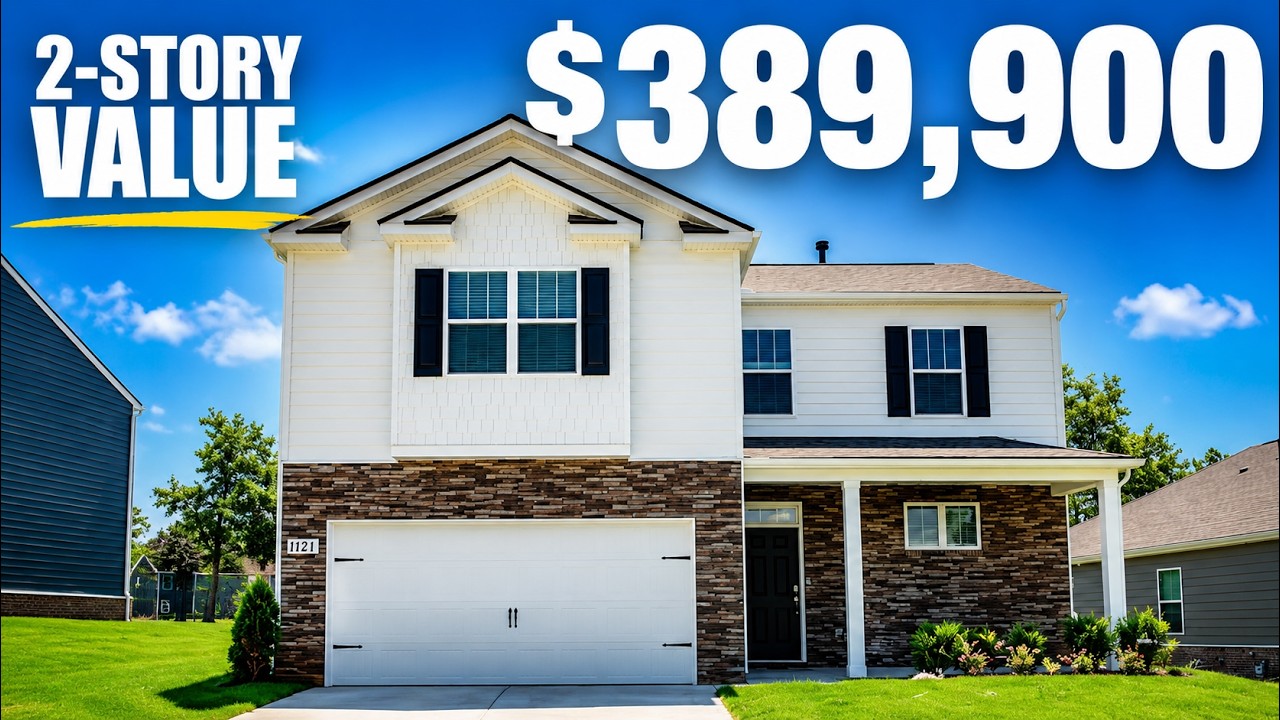
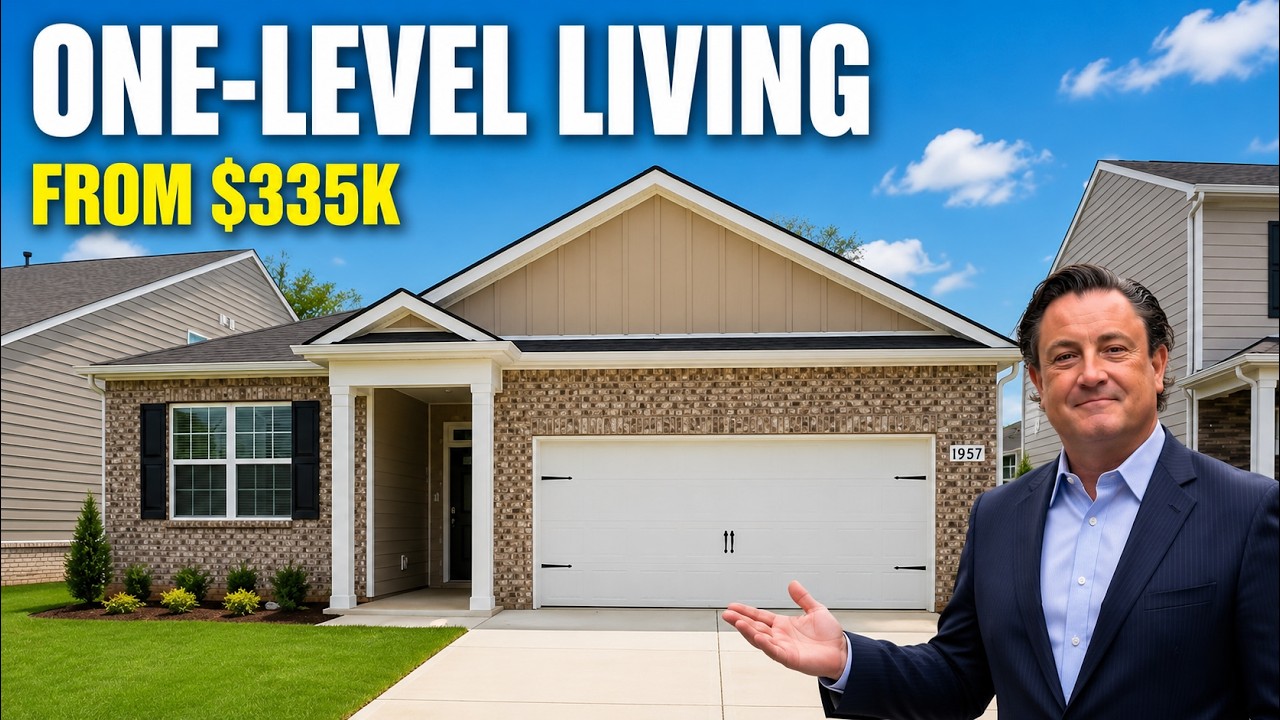
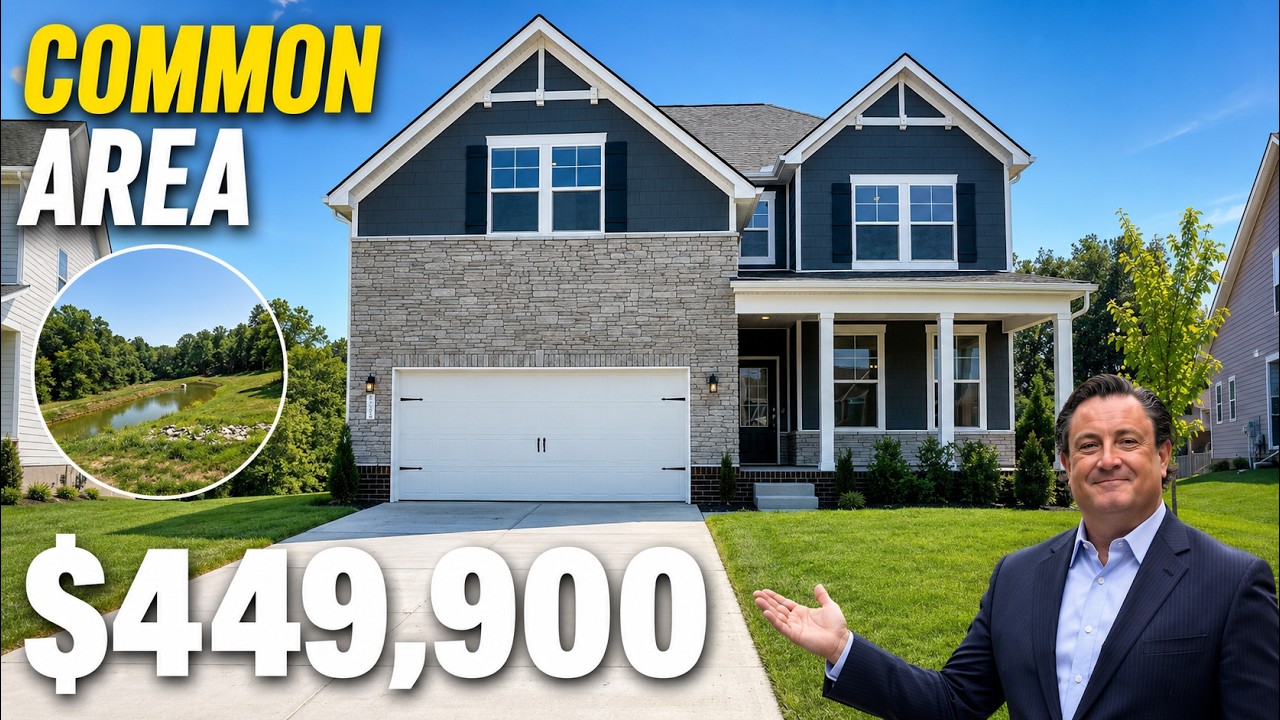
Home tours in White House
Filmed by our team on the ground — see it before you visit.