

Hillsboro Village still shows you what it has been for decades. It's about four square blocks of brick storefronts wedged between Vanderbilt and Belmont, three miles southwest of downtown, and it has stayed stubbornly itself. You can walk the whole commercial spine in roughly the time it takes a pancake to cook, which, as it happens, is the single most relevant unit of measurement in this neighborhood.
Where You'd Love to Live · 3-Minute Quiz
Is Hillsboro Village the one — or is there a better fit you haven't seen?
Three minutes instead of months of research — no sign-up to see your top match.
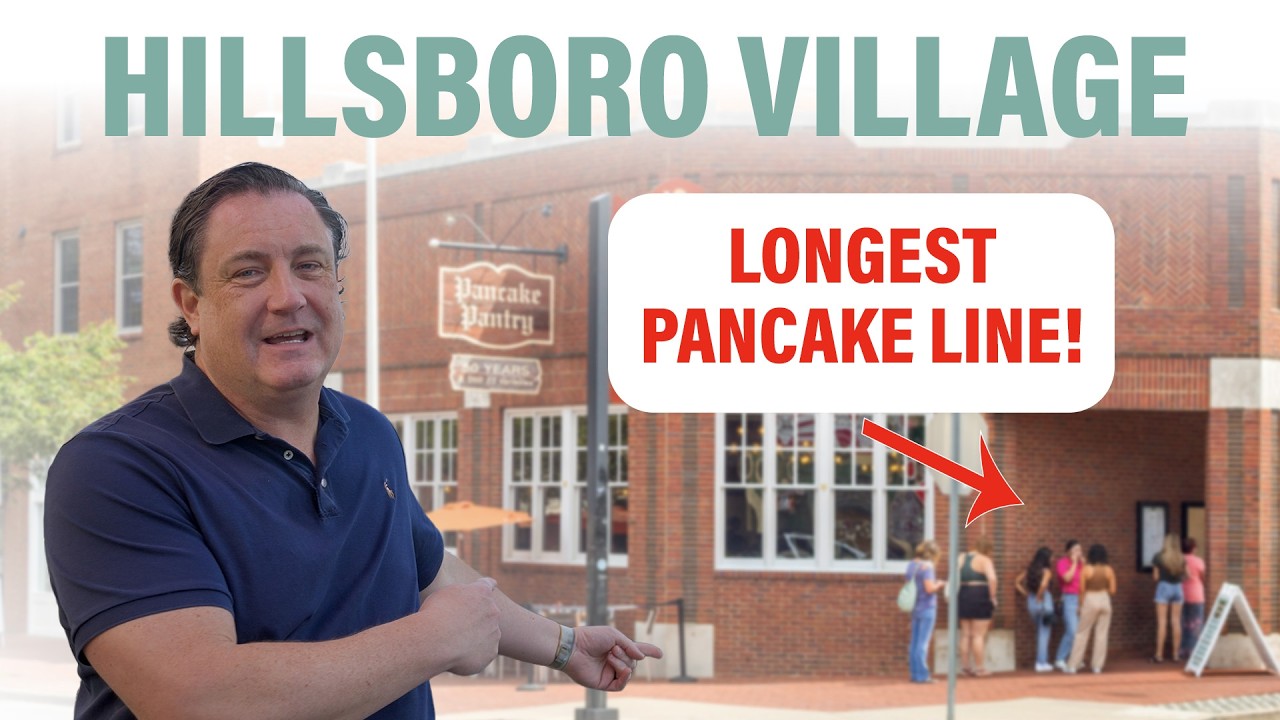
I have stood in the line at Pancake Pantry on a Saturday. I want to be clear that I did this on purpose, like an adult who makes decisions. The line ran down 21st Avenue South past two other businesses, and at no point did anyone in it seem surprised or upset. That's the thing about Hillsboro Village. The line down the block isn't a problem to be solved. It's just Saturday. People who move here either make their peace with that or they go to a Waffle House like a reasonable person, and honestly both are correct.
This is a small, walkable, college-flavored commercial district that happens to have houses pressed up against it on every side. It is not a master-planned anything. Nobody designed the vibe. It accumulated. And if you're moving to Nashville from out of state and trying to figure out whether this is your spot, the honest answer is that it depends almost entirely on how you feel about being in the middle of everything at all times. Let me walk you through it.
If You're Moving Here From Out of State
Start with the map, because the map explains almost everything about daily life here. Hillsboro Village sits roughly three miles southwest of downtown Nashville, in the 37212 zip code. Its commercial heart is 21st Avenue South — that's the spine, the main drag, the street every local means when they say 'the Village.' Vanderbilt University is immediately to the northwest. Belmont University is just to the south. Interstate 440 forms the southern boundary, and Wedgewood Avenue runs near that southern edge. You are, in other words, boxed in by two campuses and a highway, which is part of why the neighborhood never sprawled. It physically can't.
Daily life here is defined by one word: walkable. Not Nashville-walkable, which usually means 'you can technically walk but you'll be the only person doing it.' Actually walkable. The commercial core packs 25-plus restaurants, cafes, and specialty shops into those four blocks, so coffee, breakfast, a movie, a haircut, a bookstore browse, and dinner are all a sidewalk stroll apart. People who live in the Village proper genuinely do their day on foot. That is rare in this city and it's the entire pitch.
Here's who it fits. If you want to step out your door and be in the middle of a living, independent commercial district — if the idea of a walk-to-everything morning sounds like the whole reason you're moving — this neighborhood delivers it for real. If you're coming from a dense city and the thought of needing your car for a coffee makes you twitchy, you'll exhale here.
And here's the honest trade-off, said plainly: you are buying into a place that is busy, tight, and built around two universities. That means foot traffic, that means the academic-calendar rhythm of move-in weekends and game days, and that means parking is a contact sport. The housing stock is older and the lots are compact — this is a turn-of-the-last-century streetcar neighborhood, not a subdivision, so square footage and driveways are at a premium and you pay for the location. If your dream is a big quiet yard and a three-car garage, the Village will frustrate you, and that's not a knock on the Village. It's just not what this place is. It never was.
The Texture: What It's Actually Like Here
The reason people fight over the few houses in and around the Village is that the location does something most Nashville locations can't: it makes a car optional. Let me give you the texture, the stuff you only learn by walking it, because that's what you're actually buying.
21st Avenue South, the spine
Everything organizes around 21st Avenue South. It's the street the whole neighborhood faces. The storefronts are old and close together, the sidewalks are narrow in the best way, and the businesses skew independent and long-tenured rather than national-chain — though a few well-chosen chains have slipped in too. The result is a corridor that feels like one continuous errand. You park once, if you can park at all, and then you're on foot for the rest of it. That's the Village's superpower and it's the thing photos never capture, because the magic is the density, not any single building.
The Belcourt Theatre
At 2102 Belcourt Avenue sits the Belcourt Theatre, and if you only learn one anchor in this neighborhood, learn this one. It opened in 1925 as a silent-movie house, got a full renovation, and reopened in 2016. It is now Nashville's home for art-house and independent film — indie premieres, retrospectives, repertory runs, the cult-classic midnight stuff. A nonprofit cinema this old, this loved, and still running first-run independent films is not a thing most cities get to keep. For a lot of Village residents, 'I can walk to the Belcourt' is reason enough to live here, and I understand them completely. There is something deeply civilized about deciding to see a movie and then simply walking to the movie.
Fannie Mae Dees Park, the Dragon Park
Over on Blakemore Avenue, at 2400, you'll find Fannie Mae Dees Park, which roughly nobody calls by that name. Everybody calls it Dragon Park, because the centerpiece is a roughly 200-foot mosaic-tiled sea-serpent sculpture by artist Pedro Silva, installed in 1981. The park itself was created in 1978 and named for civic leader Fannie Mae Dees. The dragon is a genuine local landmark — kids climb it, parents photograph it, and people who grew up in Nashville have a picture of themselves on it somewhere. It's the neighborhood's green-space anchor and its most photographed object that isn't a stack of pancakes. (Capers Avenue, nearby, ties into Fannie Mae Dees's own history, for the local-trivia collectors among you.)
The food, which is the point
You did not move to a four-block district for the parking. You moved for what's in the four blocks. Here's the honest eating rundown, and I've tried to tell you what these places actually are rather than just listing names:
- The Pancake Pantry (1796 21st Ave S) — the Nashville institution. Opened in 1961 by Robert Baldwin, it runs about 23 varieties of pancakes plus a full breakfast-and-lunch menu, and the weekend line snaking down 21st Avenue is a defining neighborhood ritual, not a fluke. Go on a weekday morning if you actually want to eat in this decade. Get the sweet potato pancakes and stop overthinking it.
- Hopdoddy Burger Bar (1805 21st Ave S) — an Austin-born burger spot with a covered patio that looks right out over 21st, with the Belcourt next door. Buns baked in-house, fries hand-cut, a full bar with hand-shaken margaritas. The patio is the move when the weather behaves, which in Nashville is a negotiation.
- The Grilled Cheeserie (2003 Belcourt Ave) — the brick-and-mortar home of the Nashville food-truck brand, open daily, slinging gourmet grilled-cheese melts and the kind of nostalgic comfort food that does not require a special occasion. Note the address: it's tucked on Belcourt, steps off the main drag.
- Brown's Diner (2102 Blair Blvd) — sits just outside the core Village blocks, but it's close enough and beloved enough that locals fold it in. It's a genuine old-Nashville dive, a trolley-turned-restaurant that's been serving since 1927, famous for a cheeseburger people argue about. Order the cheeseburger. That's the whole review.
- The Villager Tavern (1719 21st Ave S) — the neighborhood's dive bar in the best, most honest sense: beer, darts, a low-key hang. It's the place you end up, not the place you plan.
Now, the one you need to hear about before you fall in love with it. Fido, the longtime cafe and coffeehouse at 1812 21st Avenue South, has been a Village fixture since 1996. In late 2025, founder Bob Bernstein announced that Fido will close — the last day is set for June 1, 2028 — citing rising costs and lease realities (per the Nashville Scene and NewsChannel5, 2025). It is open and operating today, and it has a long, intentional goodbye planned. But I'm not going to tell you it's a permanent fixture, because it isn't, and you'd find out the hard way. Enjoy it while it's here, and understand that this corridor sees turnover. Beloved is not the same as forever.
The shops
The Village has held onto real specialty retail, which is harder than it sounds in a city where rents keep climbing. UAL — United Apparel Liquidators (1814 21st Ave S) — is the discount-designer destination, racks of high-end brands at a steep markdown, the kind of treasure-hunt store you either love or find overwhelming. There are coffeehouses and casual cafes built for a campus-adjacent crowd, and independent boutiques scattered through the blocks. Retail here turns over — I'd check whether a specific shop is still around before you build a Saturday around it — but the character of independent, browse-on-foot shopping has stayed remarkably intact.
The Honest Trade-Offs
I'm not here to sell you a postcard. Here's what living in or right around Hillsboro Village actually costs you, beyond the price of the house.
- Parking is the daily tax. Four packed blocks between two universities means the curb is always working hard. If you live here, you learn the rhythms — when the students are around, when they aren't — and you adjust. If you can't stand circling the block, weigh that honestly before you commit.
- It's busy, and the busyness has a calendar. Two universities means the neighborhood breathes with the academic year. Move-in weekends, game days, finals-week ghost towns. The foot traffic that makes the Village feel alive is the same foot traffic that makes it loud and crowded. Those are the same coin.
- The housing is older and tighter. This is a historic streetcar-era neighborhood with compact lots. You're paying a premium for walkability and location, not for square footage or a sprawling yard. That's the deal everywhere this convenient.
- It is, by design, small. Four square blocks of commercial core is wonderful and finite. You will know the businesses by heart within a month. Some people find that comforting and some find it limiting, and only you know which one you are.
None of this is a warning. It's a fit test. The people who love Hillsboro Village love it specifically because it's compact, walkable, busy, and lived-in. If you read that list and felt your shoulders relax, you already have your answer.
Quick Questions
How far is Hillsboro Village from downtown Nashville?
About three miles southwest of downtown. It's a short drive in normal traffic, and Interstate 440 runs right along the neighborhood's southern boundary, which makes getting out to the rest of Middle Tennessee straightforward. The catch, as always, is that 'short drive' and 'Nashville traffic' don't always cooperate.
Is Hillsboro Village actually walkable?
Yes, genuinely — here 'walkable' isn't marketing. The commercial core is about four square blocks with 25-plus restaurants, cafes, and shops packed in, so residents in and right around the Village really do run their daily errands, coffee, dinner, and a movie on foot. That's the whole appeal.
What is Hillsboro Village near?
It's wedged between Vanderbilt University to the northwest and Belmont University to the south, with 21st Avenue South as its main street. It's near Midtown, the Music Row area, and the broader West End side of town, and Interstate 440 connects it quickly to the rest of the region.
Does Hillsboro Village feel expensive?
It feels like what it is: a small, in-demand, walk-everywhere district with older homes on compact lots, very close to downtown and two universities. You're paying for location and walkability rather than land or square footage. We can't predict where prices go — nobody can — but the demand drivers here are easy to name: the location, the four-block density, the Belcourt, and the fact that there simply aren't many houses inside a neighborhood this convenient. When you want real numbers, a local expert on our team can pull current comparable sales for any specific block or property.
What's the parking situation like?
Tight, and it's the most common gripe. Between the foot traffic, the two campuses, and the compact footprint, curb space is at a premium most of the day. Residents learn the patterns and plan around them. If you're visiting first, build in a few extra minutes to find a spot — and consider just walking once you're there, because the whole place is built for it.
What schools is Hillsboro Village zoned for?
School zones in Middle Tennessee are tied to specific addresses, not to neighborhood names. When you share an address, our team will pull the assigned schools along with the Tennessee Department of Education report cards so you can review them yourself and decide what fits your family.
Hillsboro Village vs. 12 South: A Fit Question, Not a Ranking
The neighborhood movers most often weigh against Hillsboro Village is 12 South, its close cousin just to the east. Both are walkable, both have a tight commercial strip stuffed with restaurants and boutiques, and both put you minutes from downtown. The difference is one of texture, not quality, so think of it as a fit question.
Hillsboro Village is older, more academic, and built around the Belcourt and the two campuses pressing in on it — its character comes from decades of staying the same while the city changed, and from being a genuine college-town district with the foot traffic to match. 12 South is the more recently redeveloped strip, newer in feel and famously busy with visitors and photo-takers along its main blocks. If you want the institution — the silent-era cinema, the pancake line that's older than most of the customers, the lived-in patina — Hillsboro Village is your spot. If you'd rather be on the newer, of-the-moment strip, 12 South may fit you better. Neither is the 'right' answer. They're answers to different questions about how you want your block to feel.
Read Next
- Best Restaurants in Hillsboro Village — our full eating guide to the four-block core, what to order at each spot, and how to time the Pancake Pantry line.
- The Buyer's Guide to Hillsboro Village & the West End Side — the real process, the price reality of older homes on compact lots, and the gotchas that catch out-of-state buyers in this part of Nashville.
- Living in 12 South — the close-cousin comparison, walked block by block, for movers deciding between the two.
Thinking about Hillsboro Village? Let's talk before you fall for a listing.
Hillsboro Village rewards people who know exactly what they're buying — a walk-everywhere location with older homes, tight lots, and almost no inventory when something good comes up. A local expert on our team can pull current comparable sales for any block, flag the property-specific things that matter here, and tell you honestly whether this neighborhood fits how you actually want to live. Call or text 615-265-1000. No pressure, no script — just a straight conversation about whether this is your spot.
615-265-1000From our YouTube channel
Tour Hillsboro Village with us
Filmed by our team on the ground — see it before you visit.